
Wry & Dry
Edition #15–27
Israel: ungovernable? Brazil: age shall not weary them. US midterms: a lame duck?
30 October 2026
Copyright 2026 First Samuel Limited
Wry & Dry: a cynical and irreverent review of the week in politics, economics and life. For intelligent Readers who disdain the trivial.
Investment Matters
This week, IM reports on:
- Inflation: it’s left to the RBA to confront Australia’s structural problems
- BlueScope’s earnings upgrade
- Aurelia Metals: we met with the new CEO, who inherited a thriving business
Wry & Dry’s ponderings…
It’s Christmas for psephologists: a ghost of elections past (Israel, Brazil), elections present (US), and elections to come (Victoria). In Israel, as W&D predicted last week, the Arab parties might be king makers, but neither Netanyahu nor Eisenkot are interested. Another election is likely. Down in Brazil, everyone was shocked at the result; the loser fled the country, something about corruption.
Next week’s US mid-terms might prove that Americans hate socialists more than Trumpster, especially as the economy is booming. Victoria’s competing wannabe premiers have the state’s credit card out. And the UK has another budget. Australia: inflation up, expect interest rates to rise on Tuesday.
Israel: ungovernable?
Israel has voted again, and once again produced a result with which nobody can govern. Netanyahu’s bloc (far right and far, far right) has about 53 seats, eight short of a majority. Gadi Eisenkot’s camp (right) has 48, and the Arab parties (to the left of the other two) have a record 19. That makes 67 for the opposition, until you subtract the parties that would rather lose than sit together.
Eisenkot won’t serve under Netanyahu. Neither will serve with the Arab parties. In Israel, arithmetic is a matter of conscience.
If coalition talks fail, Israelis go back to the polls, which has become something of a national pastime. Netanyahu stays on as a caretaker in the meantime, which for him is less a job than a lifestyle.
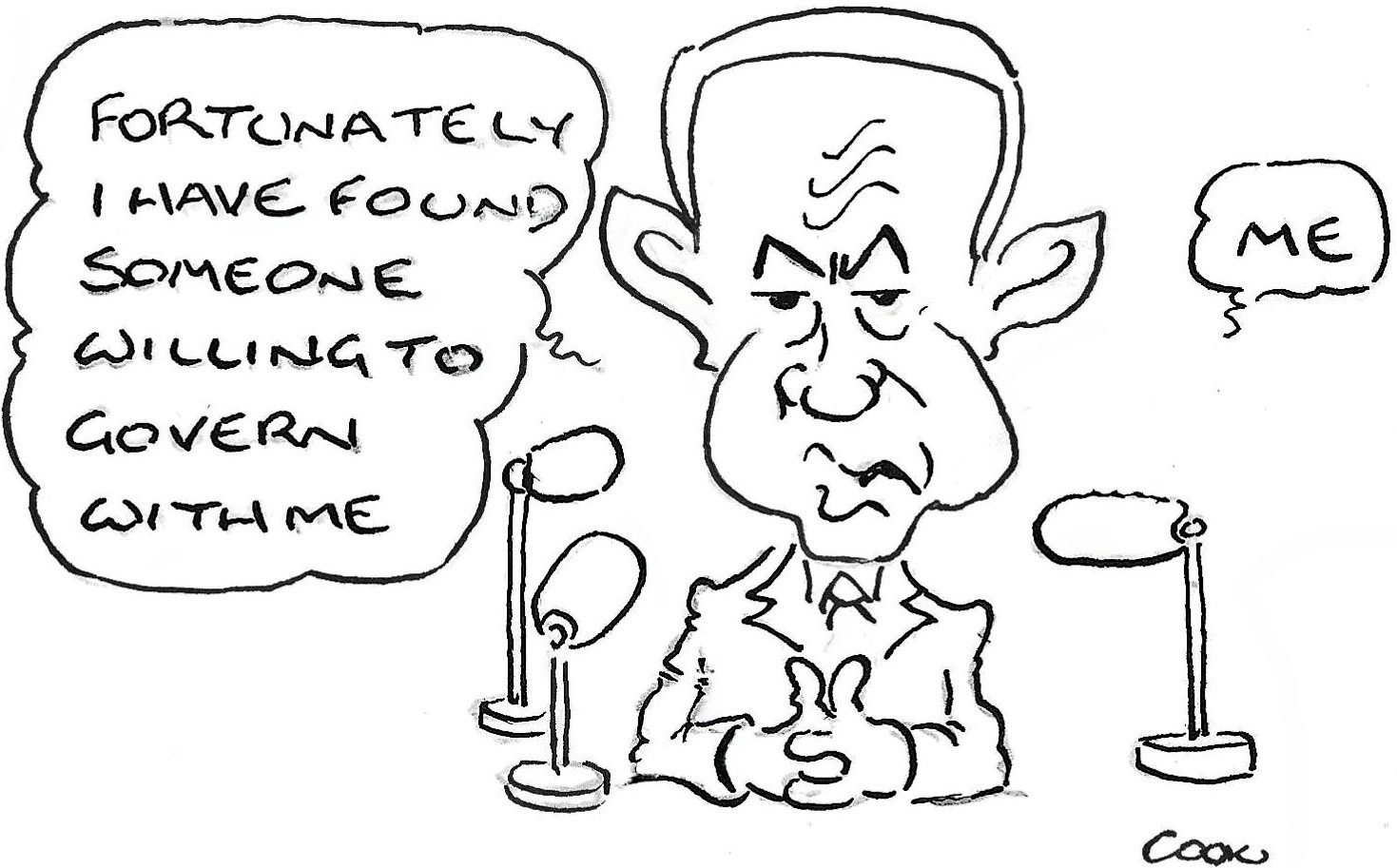
For Trumpster, the stalemate changes little. He has hinted at resuming dropping bombs on Mojtaba Khamenei’s front lawn after the midterms, and Netanyahu campaigned as his only partner for the job. But caretakers can still drop bombs, and Eisenkot has backed Netanyahu on all action against Iran and Hezbollah. Tehran shouldn’t count on a coalition crisis to save it.
Brazil: age shall not weary them…
Luiz Inácio Lula da Silva (‘Lula’) celebrated Sunday’s re-election as president of Brazil in style: two days later he turned 81, the oldest man ever elected to lead the country. The markets sent him a birthday card: the real (Brazil’s currency) fell 8%, the Bovespa (the local stock market) tanked 13.9%, and the share price of Banco do Brasil (Brazil’s second largest bank) shed 29%. This is one way of blowing out the candles.
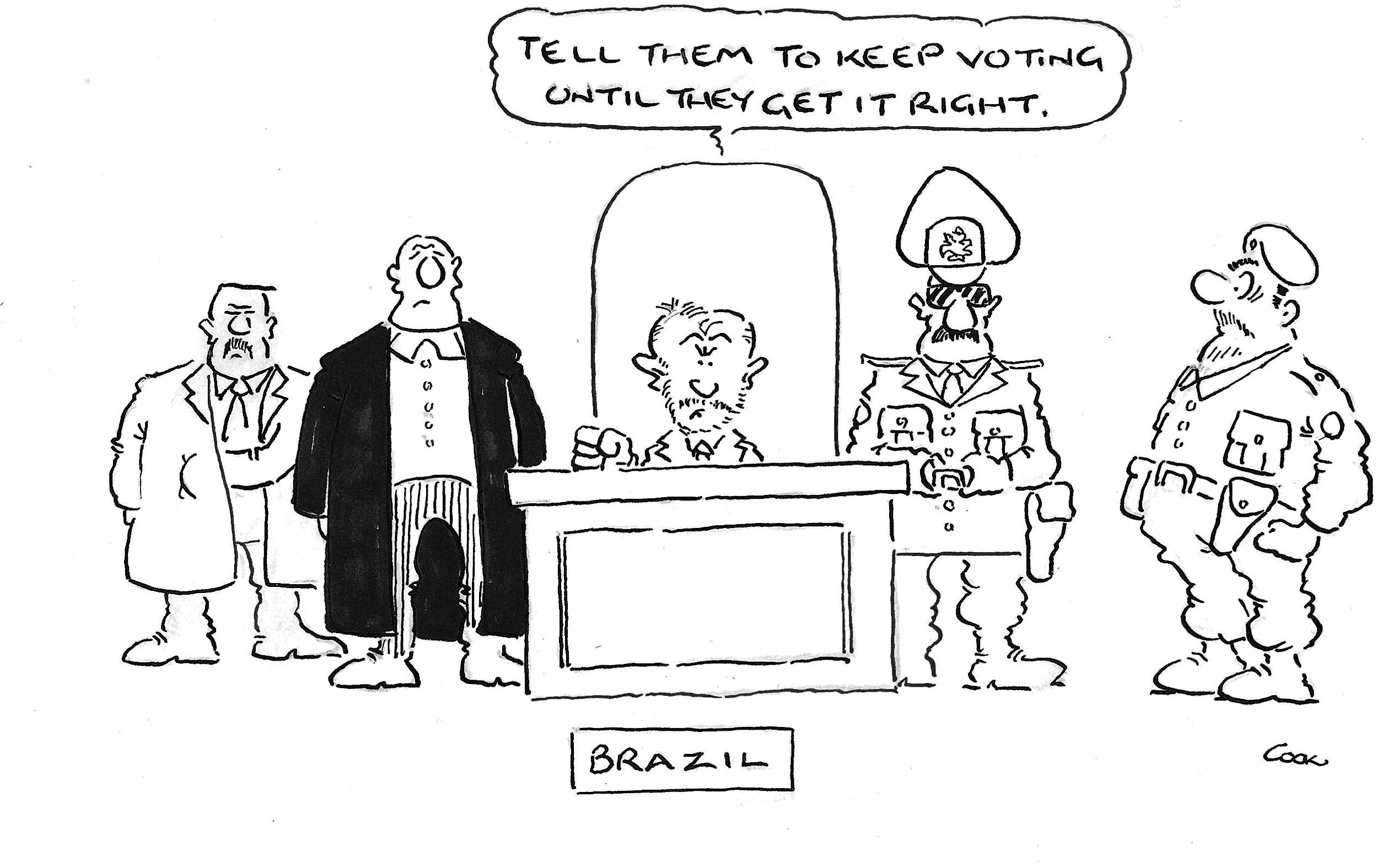
Lula’s campaign promised free weekend transport, debt forgiveness and fatter welfare cheques, from a government already running a deficit of about 8% of GDP. Investors had hoped for a decent finance minister. They got a party planner.
Was Lula too old? Careful. He is just eight months older than Donald Trump, and both men remain convinced the bill is always somebody else’s problem. The difference is that Washington prints the world’s reserve currency. Brasília prints promises.
Lula will be 85 when this term ends. The deficit will feel older.
US midterms: a lame duck?
Americans vote next Tuesday, and the polls tell a simple story: they can’t stand Trumpster. His approval rating is somewhere in the 30s, territory normally reserved for dentists, journalists and airlines.
The Republicans’ remaining strategy is to remind voters of something they dislike even more: socialists. It’s a fine American tradition. If you can’t be loved, be the lesser loathed.
The trouble is that the numbers aren’t cooperating. Forecasters make the Democrats clear favourites for the House and narrow favourites for the Senate. To take the Senate they need four ‘flips’, from places like Maine, North Carolina, Ohio, Alaska and even Texas. The socialist scare may save Republicans a seat or two. As might the booming economy (+3.4% in the September quarter). Whether it saves their Senate majority is another matter.
If Democrats win even the House, Trump becomes a lame duck with subpoenas attached. But he keeps the veto, the Iran file and his Truth Social account. Lame ducks can still quack. As he will from the grave.
Victoria: another handicap
It’s Melbourne Cup time.1 Which means not only a public holiday, but a celebration of an equine race where the best horses are handicapped according to their ability. The more ability, the larger the weight carried. Which is quite timely, as Victorian business has been handicapped by carrying the lead weight of twelve years of corrupt and incompetent government.
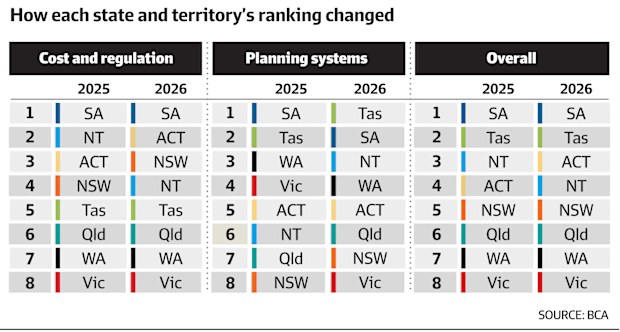
And more proof of this cataclysm has arrived. Victoria has done it again: ranked stone motherless last in the nation in a survey for pro-business policies, for the third successive year.2 An inverse Makybe Diva-sort of record.3
After twelve years of Labor, the form guide reads: heavy track, heavier taxes. Punters after a long shot could back fiscal reform. The odds are generous.
1 The Melbourne Cup is an annual Group 1 horse race of $10m. It is a race of one mile and 1,739 yards for three-year-olds and older, and is the pinnacle of the Melbourne Spring Racing Carnival. It is the richest two-mile handicap in the world. Many of the 100,000 expected attendees will not see the race, having consumed pints of champagne of dubious provenance.
2 Source: Business Council of Australia, annual ranking of competitiveness in each state and territory, released on Wednesday.
3 Makybe Dive won three successive Melbourne Cups (2003, 2004, 2005)
Interest rates: up
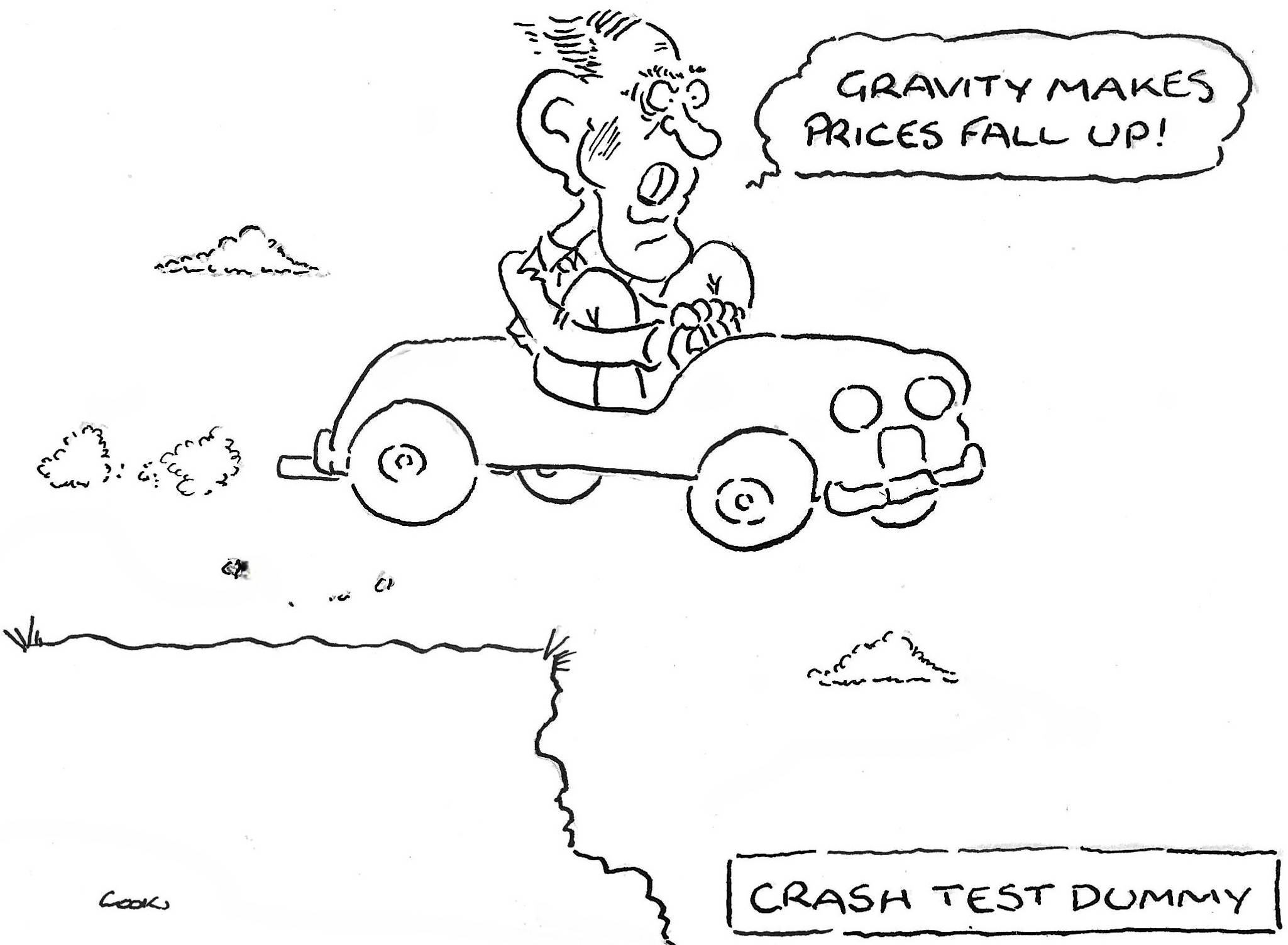
Next Tuesday, as the nation stops for the Melbourne Cup, the Reserve Bank may stop it a little further. Markets give the RBA nearly nine-in-ten odds of a fifth rate rise this year, to 4.85%. That’s a better price than most of the field.
Australia’s inflation hit 4.3% in September. Grim Jim blames the Strait of Hormuz, and petrol did jump 9.4% in a month. But petrol doesn’t explain services inflation at 4.1%. Nor does it explain a ‘trimmed mean’, which excludes fuel, running well above the RBA’s own forecast. The Business Council reckons three points of the headline figure are home-grown.
“Budgets aren’t the primary driver of prices,” says Grim Jim, to the laughter of those within earshot.
Reports: Lessons in fashionable hatred
In an interim report released today, Australia’s antisemitism envoy Jillian Segal has diagnosed a new strain of the old disease: the well-meaning kind. Its carriers don’t wear jackboots. They wear lanyards, and they’re certain they’re on the right side of history, which is what makes them so hard to correct.
She notes a newer, more palatable form of antisemitism from “well-intentioned people” who are critical of Israeli policies and transfer that criticism onto Jewish Australians, “thinking that they are upholding progressive values and human rights”.
Exhibit A is the university sector, which has spent years failing to agree on what antisemitism even is. These are institutions that can produce a style guide for every identity on campus, yet they stall on the world’s oldest hatred. Encampments were waved through as free speech, a courtesy rarely extended to Jewish students who wanted to attend class unbothered.
Exhibit B is the ABC, which already has an internal ombudsman to mark its own homework. Segal wants an external watchdog. Expect the broadcaster to discover the virtues of self-regulation, an odd position for an organisation whose business is scrutinising everyone else.
Exhibits C and D are the health sector and the arts.
The royal commission reports on 18 December. Expect exhibits A, B, C and D to have already flooded the moats, raised the drawbridges and lowered the portcullises.
IPOs: Anthropic, come on down
Anthropic, the company behind Claude (a series of proprietary large language AI models), filed with the US Securities and Exchange Commission this week and plans to list on the Nasdaq under the ticker “ANT”.
That is a modest ticker for an immodest ambition. Trading could begin as soon as 16 November, and analysts’ valuation estimates run from about $US1.2 trillion to $US1.5 trillion. Some speculation goes as high as $US2 trillion.
The IPO itself (i.e. the size of the shares being floated, as distinct from the valuation of the entire company) will probably be the largest ever.
Investors, as always, are being asked to put a price on the future. The future has declined to comment.
UK budget: four pence off gherkins
UK PM Andy Burnham promised to end forty years of neoliberalism. His new Chancellor (i.e. Treasurer) John Healey has just introduced his first budget; the key item of which was to suspend import tariffs on over 100 everyday supermarket items. Including gherkins.
Readers, especially those in the UK, will be thrilled to know that the saving is four pence off the price of a jar of gherkins. Every revolution has to start somewhere, and this one started in the pickle aisle.
Healey is the Chancellor you appoint when you want the Treasury run by someone who won’t frighten the horses, the markets or, above all, the Prime Minister. He rose without trace, and he has now delivered a Budget to match.
The UK Office of Budget Responsibility has no such manners. It says growth will be 1% next year, real earnings won’t grow for two years, and this parliament is heading for the worst living standards on record.
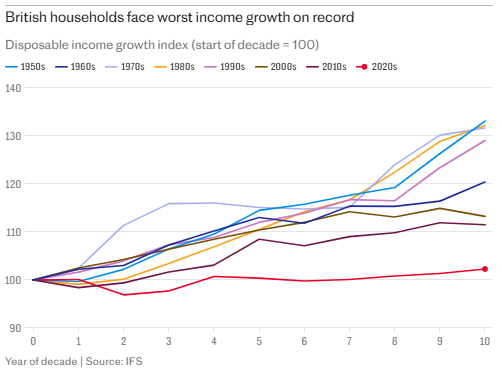
Opposition Leader Badenoch asked, “Is that it?” Yes. The can has been kicked down the road, and Healey’s boot print sits neatly beside Denis Healy’s.4
4 Denis Healey was UK’s Chancellor in the disastrous days of James Callaghan’s Labour government in the 1970s. The economy was so bad that Healey had to seek a bailout from the IMF. Fiscal sanity was restored, eventually, by the successor Thatcher government.
The EU: Rejoining by instalments
UK PM Andy Burnham wants to wind back the clock and to get the UK back in the EU. And is approaching the task the same way a cautious man approaches cold surf: one toe, then an ankle, then a long pause to check the polls.
First comes an “honest discussion” about free movement of people. Then a summit on 20 November with a menu of “options.” Then a party ‘manifesto’5, at which point collective responsibility kicks in and every Brexit-sceptic minister discovers a sudden, sincere love of Brussels.
The strategy is less Europhile than electoral. Burnham’s real targets aren’t in Paris or Berlin but in Brighton and Bristol: the Greens, the Corbynite splinters and assorted left-wing grievance merchants who feast on Labour’s timidity. Offer them Europe and their best tune is gone. Mr Polanski, recently between engagements, may need a new one.
The snag is the average Briton, who would cheerfully rejoin the EU provided it came without the one thing Brussels insists is non-negotiable: free movement of people. Britain wants the croissant, not the bakers.
Farage, naturally, is delighted: a fresh Brexit war is his best recruiting sergeant. But Burnham will move when the numbers say so, and not a moment before. That isn’t leadership; it’s politics.
5 A quaint UK political document, published by a political party before a general election, setting out the policies it would deliver if they were to win. Its importance is that the House of Lords cannot, because of the ‘Salisbury convention’, reject legislation that was in the winning party’s election manifesto, unless it is a minority government.
Snippets from all over
Germany says no to Canada
Germany has blocked a plan to grant Canada associate membership of the European Union. (UK Telegraph 30 October)
Wry & Dry comments: But a Clayton’s version will emerge.
Google sheds half a trillion in market value
Google’s stock suffered its worst day on record Thursday as investors confronted the reality that a company that has long been a dynamo of growth and profits faces painful trade-offs from the artificial-intelligence transition.
The slide erased roughly $500 billion from Alphabet’s market value. Google’s 13% decline also weighed on major U.S. stock indexes, fuelling a decline in the Nasdaq composite. (Wall Street Journal 30 October).
Wry & Dry comments: Perhaps, just perhaps, the costs of the global AI build-out may be outrunning the returns.
Apple’s Crackgate
The debut of Apple’s first foldable iPhone has hit an early snag after some users reported broken screens just days after its release, a phenomenon already dubbed “Crackgate”. (Financial Times 28 October)
Wry & Dry comments: Bring back the BlackBerry!
Tsar Vlad gets a call
Finland’s and Norway’s leaders spoke by phone with Russia’s president. (Wall Street Journal 28 October).
Wry & Dry comments: On a Nokia phone, no doubt.
Microsoft begins to downsize.
Microsoft will offer buyouts to 60,000 employees – roughly a quarter of its global workforce – as it looks to trim costs to fund its AI investments. (UK Telegraph 28 October).
Wry & Dry comments: ‘Buyout’ is a euphemism for a voluntary redundancy.
Serbia’s president gets DCM
The Serbian leader Aleksandar Vučić conceded defeat in an election on Sunday to a student movement seeking to end corruption and creeping authoritarianism in the Balkan country. (The Times, 26 October).
Wry & Dry comments: European observers hoping the change will reverse Vucic’s pro-Russian leanings may be disappointed. Analysts have said the winning party is unwilling to go against widespread pro-Russian sympathies among Serbian voters.
It figures
- Australia: 1.3%; inflation in the three months to September; up from 0.6% in the June quarter.
- US: 0.00%; change in the Fed’s interest rate.
- US: 3.4%; GDP growth rate in September quarter, up from 2.2% in June.
- France: 80; level of consumer confidence, the lowest since 1972.
And to soothe your troubled mind…
“Xi’s ability to cut a swath through the Central Committee without any apparent loss of ideological authority suggests that he retains an iron grip on Chinese elite politics and is well placed to secure a fourth term as leader at next year’s 21st Party Congress"
Neil Thomas, a China expert on Emperor Eleven giving the DCM to 33 high-ranking party officials and senior military commanders.
Wry & Dry comments: Ah, yes. The open window on the seventh–floor.
Disclaimer
The comments in Wry & Dry do not necessarily reflect those of First Samuel, its Directors or Associates.
Cheers!
Wry & Dry is Anthony Starkins’ personal publication. The views expressed are his own and do not necessarily represent the views of First Samuel Limited. It is not financial product advice.
Share this article
Email article