Unemployment rate & Emeco deep dive

This week, a new set of ABS Labour Force data was added to the plethora of economic data released in recent weeks. Once again, the impact on RBA interest rate decisions was to the fore.
This month, the unemployment rate held steady at 4.3%, but the number of people working fell by 21,000.
So what happened?
Gold, a quiet week of research and ABS National Accounts (i.e. GDP data)
Following a week in Perth, the Investment team expanded its research efforts by attending the UBS Industrials Melbourne Corporate Day—an efficient forum that brings together a wide range of companies in a single sitting.
Recovering markets and updates on Aquirian Limited, Emeco, Matrix Composites & Engineering and Dirty Clean Food
First Samuel portfolios have outperformed through deliberate sector positioning—more exposure to small and mid-caps, less weight in the major banks—and strong contributions from technology and gold holdings. To further test portfolio assumptions, we completed an extensive visit to Perth and regional WA, meeting with management teams across key investments.
Our discussions highlighted the strategic progress underway at Aquirian, operational and technological improvements at Emeco, growing diversification and optionality at Matrix Composites & Engineering, and the profitability and distribution expansion of Dirty Clean Food. These company-level insights continue to reinforce our long-term investment positioning.
Mini ASX correction, copper outlook and updates on Sandfire, Rio Tinto and Aurelia Metals

Copyright 2025 First Samuel Limited The Market Market update In recent weeks, the ASX has come under material pressure. The ASX 200 slipped to a five-month low and registered the worst daily session of the year (-1.94%) on 18 November. Over the past month, the index has fallen roughly 6.3% from its late-October peak. Building […]
Rates, Inflation and Retail: Reading the Signals Behind the RBA’s Cup Day Hold

At Investment Matters, we try to avoid focusing on the minutiae of economic and interest-rate policy. Consuming seemingly endless writing on perceptions of the Reserve Bank (RBA) and changes in the underlying data may be a staple for the investment team, but not necessarily critical to Readers.
But there are exceptions, and the changes over the last week, including the RBA’s decision to hold the cash rate at 3.6% on Melbourne Cup Day, as widely expected, deserve attention due to their impact on markets and the Australian economy.
Rare Earths, Gold & Reliance Worldwide

This week’s Investment Matters catches up on portfolio news and commentary on recent portfolio movements.
AI Capital Allocation and Market Implications

This week’s Investment Matters examines the topic of AI investment within a historical framework of overinvestment and the misallocation of resources.
A rash of new investment in artificial intelligence in the US, especially by Nvidia, the chipmaker, and OpenAI, the owner of ChatGPT, has been announced in recent months. Investment in data centres and IT helps explain a significant portion of overall US growth in recent years. But markets have begun to concentrate on the financial engineering and cross-company relationships that funded this investment.
September CPI: Implications for Markets and Housing

The September CPI print has shifted the narrative surrounding monetary policy in Australia. While global inflation has shown tentative signs of moderation, the Australian experience highlights the structural persistence of price pressures in non-tradable goods and services.
FY-25 in Review: Navigating Markets with Discipline, Diversification and Perspective

The 2025 financial year has been shaped by a dynamic mix of economic shifts, policy recalibration, and geopolitical developments that continue to test established market assumptions.
Looking more broadly, the global economic and political landscape in FY25 has been shaped by significant challenges and unexpected developments. Arguably, the greatest single source of volatility has been the election and early presidency of Donald Trump, whose return to office has unsettled markets and policy norms alike. Many established pillars of economic thinking have been tested, sparking renewed debates over the roles of tariffs, protectionism, and central bank independence. These tensions have played out within an increasingly bipolar geopolitical context, heightening uncertainty and underscoring the value of a resilient, diversified investment approach to navigate the years ahead.
Is the ASX shrinking?

ASIC, the corporate regulator is taking the first step to make it easier for companies to join the ASX and bolster a dwindling market for floats. This move is considered by some to be the most significant change to listings for almost a decade.
In this week’s Investment Matters, Craig Shepherd explains why the ASX is failing to attract new companies and how we manage this decline in listed companies while positioning clients’ portfolios for growth.
Iran and Israel – Missiles as Shibboleth 1

we reflect on the recent escalation of conflict between Iran and Israel, and what it signals for markets, interest rates, and your portfolio.
Your Investments and the National Accounts
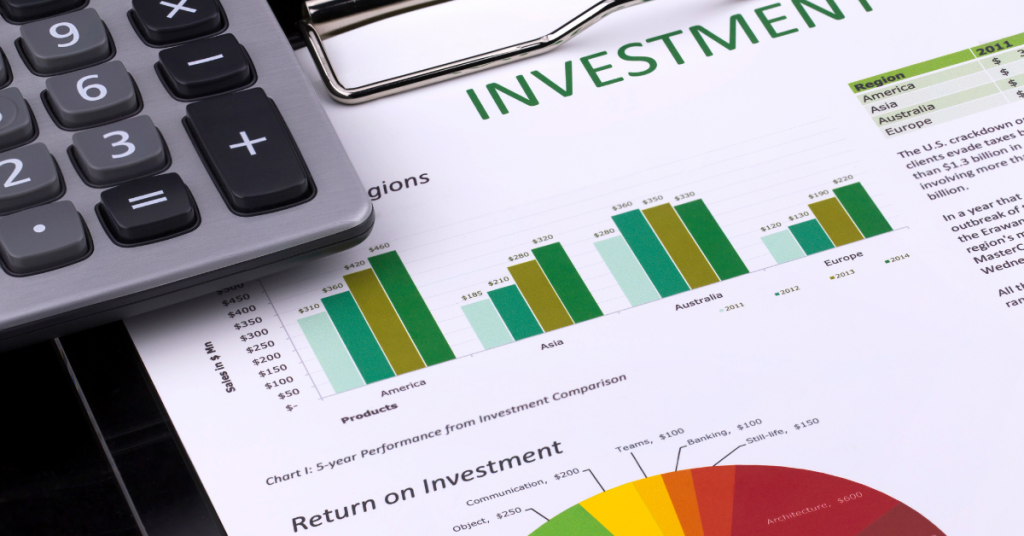
The latest ‘National Accounts’ (i.e. GDP and how its constituents contributed) released (this week) give cause to reflect on how your investments consider trends in the data.
The National Accounts is the scorecard for the RBA, politicians and policymakers alike.
It is useful to be reminded that the RBA and the US Fed have roughly similar aims.
“The Federal Reserve’s dual mandate is maximum employment and price stability. In its simplest terms, we want everyone who wants a job to be able to find one and for inflation to average 2 per cent per year.” John C. Williams, President and CEO, Federal Reserve Bank of San Francisco (March 2016)
In Australia, the Reserve Bank Act 1959 notes the Board’s duty to contribute to the stability of the currency, full employment, and the economic prosperity and welfare of the Australian people.
Similar goals often inform politicians, although it can reasonably be said that pure power and politics also play a part in their motivations.
Critical CPI print reduces risks of policy error

this week’s fascinating Investment Matters as Craig explains the trepidations surrounding Wednesday’s release of the estimate for the Q2 Consumer Price Index.
The market responded positively this week to an encouraging reduction in inflation in Australia. The direction and scale of the response can be readily understood – moving from the risk of higher interest rates to the opportunity of lower rates is a positive for Australian companies.
New Financial Year, New Opportunities Part II – Energy sector

Beach Energy, is a leading Australian independent oil and gas exploration and production company. While the energy sector is subject to volatility given underlying commodity prices, Beach Energy’s strategic positioning, future cashflow outlook and growth prospects make it an attractive investment within the sector.
Read this week’s Investment Matters as Craig explains why we think Beach Energy presents a prospective investment opportunity. Many investment banks’ Energy-sector experts see excellent value in Beach Energy at current prices.
Read why we are predominantly interested in owning exposure to movements in the price of gold, both as an insurance policy against global uncertainty or conflict and as a hedge against inflation. Plus, Craig explains why we suspect that the Mining Services and Industrials sector is likely to continue to outperform despite tough conditions.
New Financial Year, New Opportunities – Pathology and Healthcare

Part four of the year-end stocktake will outline our exposure to a final basket of stocks, the gold basket, our mining services exposure, three large industrial companies and two long-held smaller companies.
Read why we are predominantly interested in owning exposure to movements in the price of gold, both as an insurance policy against global uncertainty or conflict and as a hedge against inflation. Plus, Craig explains why we suspect that the Mining Services and Industrials sector is likely to continue to outperform despite tough conditions.
Year-end stocktake part 4: Gold, Mining and Industrial companies

Part four of the year-end stocktake will outline our exposure to a final basket of stocks, the gold basket, our mining services exposure, three large industrial companies and two long-held smaller companies.
Read why we are predominantly interested in owning exposure to movements in the price of gold, both as an insurance policy against global uncertainty or conflict and as a hedge against inflation. Plus, Craig explains why we suspect that the Mining Services and Industrials sector is likely to continue to outperform despite tough conditions.
Year-end stocktake part 3: Non-bank financials and technology

Part Three of the year-end stocktake will outline our exposure to non-bank financial stocks and several technology and medical device companies our clients own.
Discover why we have chosen to invest in areas of the non-bank financial sector, including business banking, global and domestic insurance, invoice financing, and insurance.
Year-end stocktake part 2: Lithium and Domestic economy

This week’s investment sought to highlight the logic and investment fundamentals we are creating in our lithium basket. Once again, the impact of baskets is to increase the number of stocks clients see in their portfolio, from a purely numeric perspective, but not from a thematic perspective.
The stocktake also highlights the economic outlook for our domestic economy exposure by referencing how current conditions mix with the type of management and asset features we are looking for to create an overall exposure.
Understanding Portfolio Diversification: a year-end stocktake

Each week in Investment Matters, we discuss the types of thematics that are crucial in building portfolios. We aim to combine these thematics with thorough bottom-up company research to create a well-diversified portfolio that can outperform in the medium term.
Over the next four weeks, leading into the end of the financial year, we will go towards a more detailed level, looking at individual positions. We will present an update on the portfolio companies, a year-end stocktake.