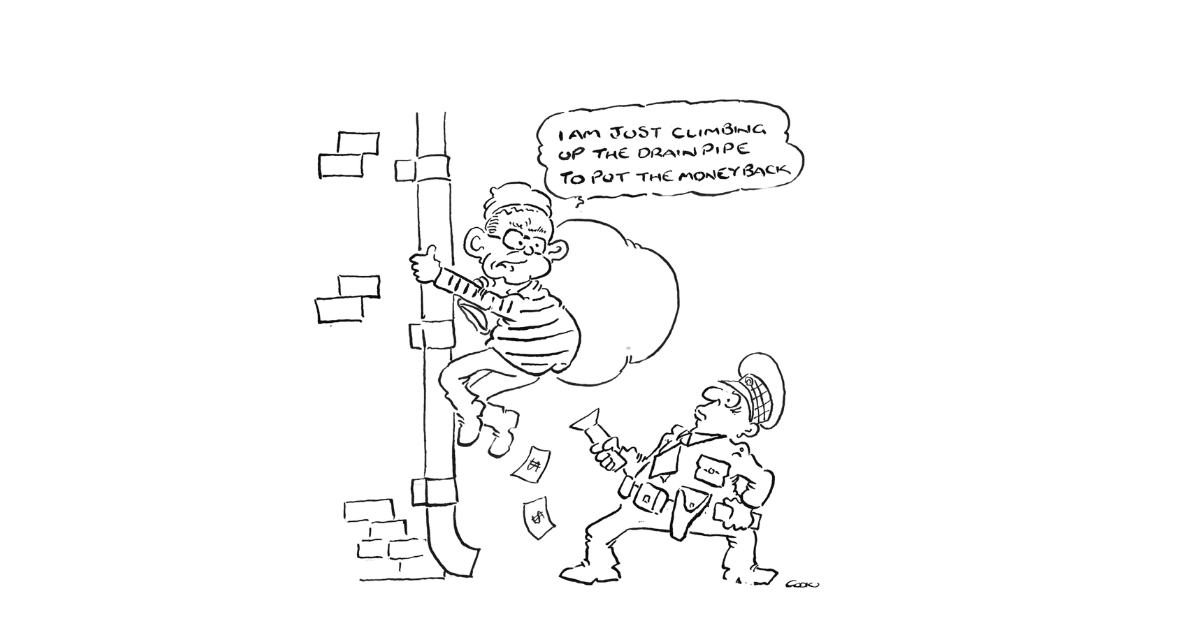
Victoria’s answer to The Borgias. The dusting off of John Howard. Carrolling.
Wry & Dry: a cynical and irreverent review of the week in politics, economics and life. For intelligent Readers who disdain the trivial.
Investment Matters
It’s early in company profit reporting season, with 95% of companies still to report. Craig could have written about Germany’s weakening economy, the decline of its car industry, or the resemblance between today’s AI investment boom and earlier railroad booms. They certainly produce interesting charts.
Instead, Craig and his team focused on companies building internal AI systems to improve products and margins. Block is one of them, and its development is relevant well beyond Block itself.
Block is a US$50 billion US-domiciled, dual-listed company and a valuable alternative to the narrow range of financials on the ASX.
Read this week’s Investment Matters here.
Wry & Dry’s ponderings…
Victoria’s anti-corruption watchdog found former Premier Andrews undertook everything short of corruption. Liberals again dug up John Howard to boost poor poll numbers. Newbie Premier Carroll shrinks his cabinet to kitchen size. Trumpster’s eight peace deals. US Democrats swing left, giving life to Republicans’ mid-term hopes.
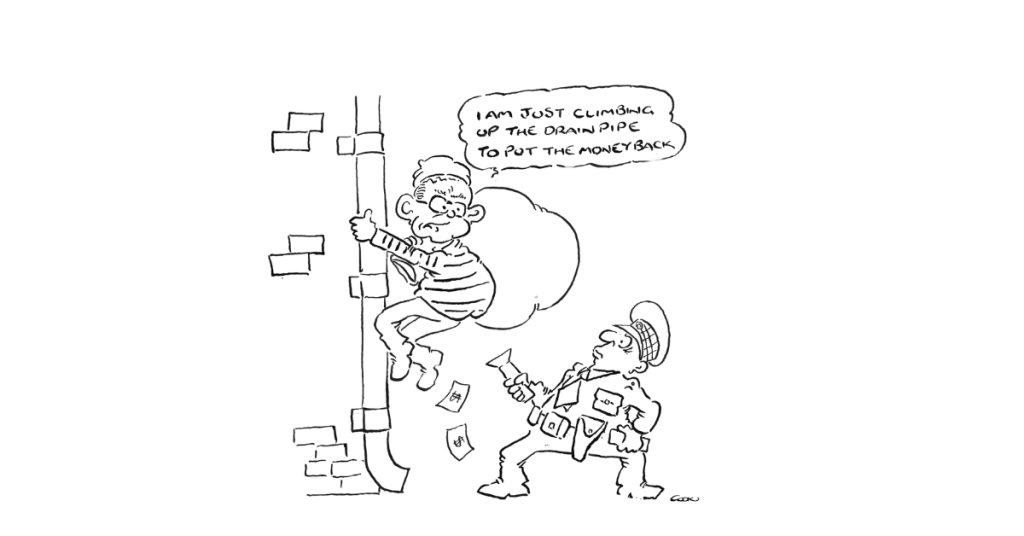
1. Victoria’s answer to The Borgias
Good news for former Premier Daniel Andrews: IBAC did not find him corrupt. Great news for everyone else: the report reads like a character reference written by someone who really despises you but is legally obliged to be nice.
Andrews’ victory-lap press release in response to the latest IBAC report was pure muscle memory from the experience of three previous adverse IBAC findings: deny corruption, declare vindication, move on before anyone reads past the headline.
This is a man with form. IBAC Operation Watts found an unethical culture across all ALP factions, systemic and decades-old; with Andrews, at minimum, aware of it throughout. Operation Sandon exposed developer cash buying access to MPs. Operation Daintree saw $3.4m funnelled to a union for training that was, per its own recipients, useless.
Four separate investigations, one Premier, zero accountability. Is there a pattern here?
Which raises the obvious question: given the pattern of concealment, minimisation and rebranding of scandal as team coaching, what else remains quietly buried in a filing cabinet somewhere in Spring Street, waiting for the next inconvenient leak?
Which brings Wry & Dry to historical comparisons, as Readers would wish. And thus, inevitably, to the Borgias.1 Rodrigo Borgia bought his papacy and then governed as though virtue were a rumour spread by his enemies; Cesare dispatched rivals with poison and called it statecraft. He also inspired Machiavelli’s The Prince.
Andrews never needed poison. He had premiership power, a compliant Labor caucus, frightened media and eight years to blur the line between government and personal fiefdom. And dispensed patronage, burying scrutiny with the same practised ease the Borgias brought to a banquet.
The Borgias were patrons of the arts in the wave of the Renaissance. But no-one has forgave their gutter-level character because of their support for struggling artists.2 In the same way, no-one should forgive Andrews’ disgusting ethics because of his successful… [err, insert a success here: …………..].
And it seems no-one will. Some 74% of Victorians want the planned statue of Andrews scrapped.3
If he ever runs out of dosh from any dastardly deeds, there’s a Netflix series awaiting. True crime, indeed.
1 The Borgias were a powerful Spanish-Italian noble family, notorious for their political ambition, ecclesiastical influence, and scandalous reputation during the Renaissance. They rose to prominence in Italy during the 15th century. The family produced two popes: Alfonso de Borja, who became Pope Callixtus III (1455–1458), and his nephew Rodrigo Borgia, who became Pope Alexander VI (1492–1503). The latter fathering several children with his mistress. There was also Cesare Borgia: Rodrigo’s son, a ruthless political figure. The Borgias were infamous for crimes such as bribery, murder, adultery, and incest. They were also patrons of the arts.
2 Pinturicchio, Leonardo da Vinci,
3 Source: Freshwater Strategy poll, cited in the Herald Sun, 7 August 2026.
2. The disinterment of John Howard
The Australian newspaper published an article written by a dusty old politician on Monday.
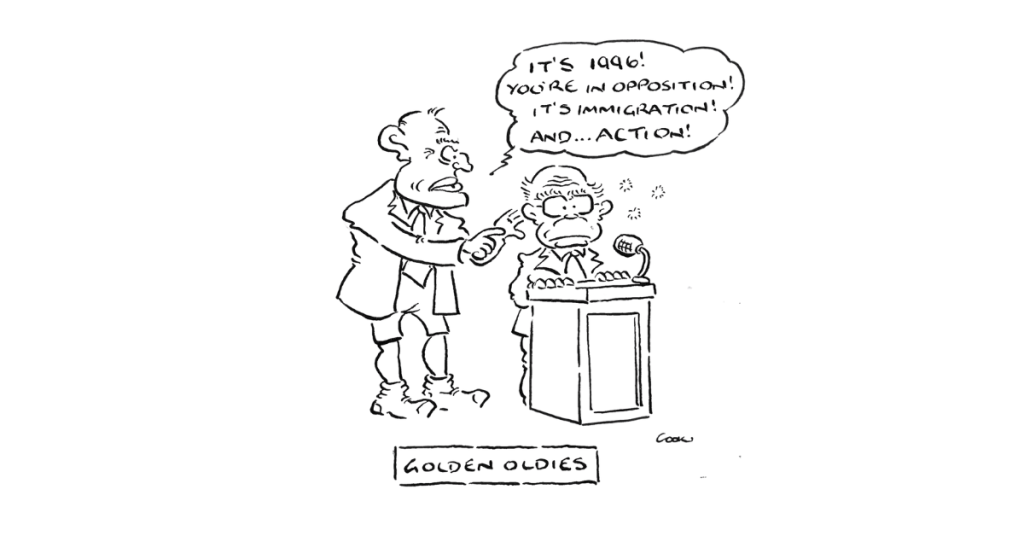
Unable to summon a single coherent sentence on immigration, the Liberals exhumed former PM John Howard and propped him up at the writing desk. Older Readers might remember Weekend at Bernie’s,3 but with fewer split infinitives and zero words not in polite use, as it were.
Wry & Dry wonders whether this dusting off of Howard was the brainwave (a generous use of the term) of new party president Tony Abbott, desperate to wrestle Liberal monoculturalists back from Pauline’s well-funded tent before they wander off entirely.
Using cutting-edge resurrection technology, Howard was made to write clearly and at length on what the Liberal’s immigration policy should be. Wry & Dry won’t dwell on the details, only to ask why he had to write anything at all.
This highlights the real problem: the Liberals cannot indefinitely borrow Menzies (who?) and Howard to again prop up sagging polls. Both were era-defining PMs. But Menzies became PM 85 years ago; Howard, 30. Good grief!
Perhaps it’s time to find someone younger and a touch more exciting to actually articulate a policy. And let John Howard’s body lie a-moulderin’ in the grave, his soul marching bravely on without him.
3 Weekend at Bernie’s is a dark comedy where two young insurance employees visit their boss’s beach house only to find him dead, forcing them into a wild weekend of pretending he’s alive to avoid suspicion and enjoy their getaway.
3. Carrolling
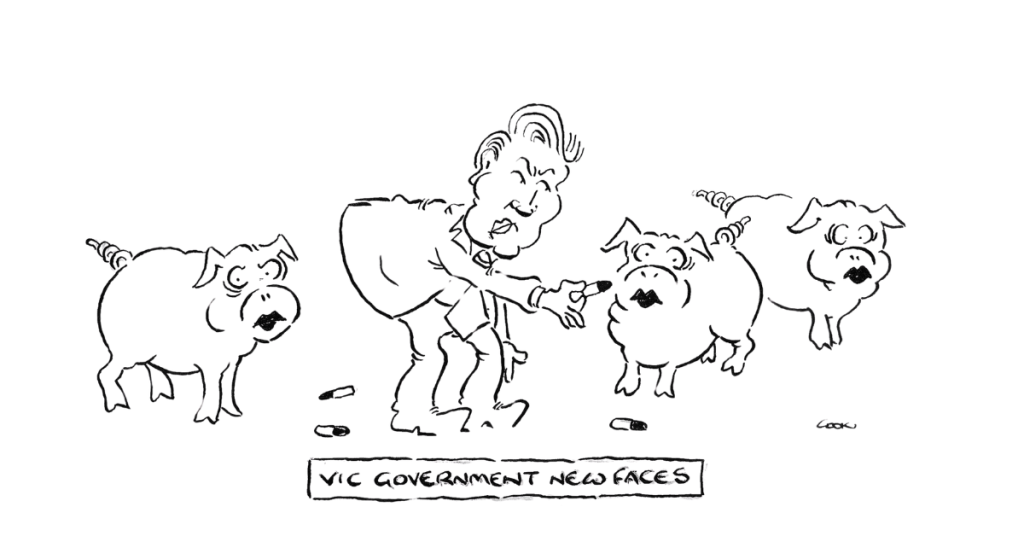
Ben Carroll has made his first decision as Victorian Premier: promptly euthanising the Infrastructure and Suburban Rail Loop portfolios. These were the very ones that dragged predecessor Jacinta Allan into the political abyss. Nothing says “new direction” quite like burying the portfolios that buried the last person.
The reshuffle installs a new Treasurer, tasked with the Herculean job of charming a business community that Labor has spent a decade treating as an ATM. The new Deputy Premier and Education Minister also inherits the teachers’ pay dispute along with Skills, First Peoples, and Women’s Affairs portfolios; a workload that suggests Carroll believes in delegation the way other people believe in horoscopes.
Carroll has also created a brand-new Artificial Intelligence portfolio, which, given the government’s recent form, feels less like innovation and more like outsourcing decision-making to something that can’t be charged with criminal misconduct.
The ministry has shrunk from 22 to 20 persons, officially to save dosh, unofficially for factional bloodletting. Opposition Leader Jess Wilson called it rearranging deck chairs on the Titanic; accurate, though it undersells how many of the same faces are still on the main deck, having approved every course correction that slammed the ship into the iceberg in the first place.
4. Trumpster’s eight
Trumpster has now “ended” the Iran war eight times, which by Nobel Prize standards makes him either a diplomatic genius or a man who enjoys re-watching the same movie hoping for a different ending.
The latest instalment: having spent the week talking himself into a massive military escalation, he abruptly announced Iran and its neighbours had begged for a ceasefire, complete with an “Immediate, Complete, and Total” reopening of the Strait of Hormuz and the tidy dissolution of Iran’s nuclear programme. Details to follow…
Saudi Arabia’s Crown Prince reportedly did the actual asking, presumably keen to keep his oil tankers un-detonated, which suggests that Iran, not Washington, currently holds the escalation high ground. Tehran itself has said remarkably little, leaving Oman and Qatar to shuttle their usual fog of ambiguous back-channel signals.
The pattern by now is unmistakable: threaten annihilation, retreat to “peace in our time,” repeat. A strategy that keeps adversaries guessing mainly because Trump himself seems unsure what he’s trying to achieve. With his approval rating well into negative double figures and petrol prices weighing on midterm maths, Trumpster wants out.
Iran, sensing weakness, keeps testing exactly how far out that is.
5. Europe’s rivers run dry
Europe’s rivers, having spent millennia patiently carrying grain, coal and Viking longboats, have decided enough is enough. The depth of the Rhine may hit 19cm in some parts this week, lower than a puddle, leaving barges hauling roughly a fifth of their usual cargo and freight costs tripling. Germany’s GDP will shed 0.2%, which is the sort of number that makes economists reach for another schnapps.
The Danube, not to be outdone, has receded far enough to expose a sunken Second World War warship and a woolly mammoth’s bones; nature’s way of saying “you think this is bad, try the last ice age.”
More pressingly, Hungary and Romania have had to shut nuclear reactors starved of cooling water; Romania resorted to dynamiting rocks to redirect the river, which is either resourceful engineering or the most dramatic plumbing fix in history. Hungary’s PM, bracing for “five most difficult days,” has asked citizens to conserve power, presumably by unplugging everything except the irony detector.
Because here it is: nuclear power and river freight are precisely the low-carbon alternatives everyone keeps demanding and now being throttled by a heatwave that climate change helped brew. Progress, it turns out, floats on water that isn’t there.
6. Democrats swing leftward
Chicago has form when it comes to hard-Left gatherings ending in tears. In 1968, the Democratic National Convention descended into a “police riot,” as Mayor Richard J. Daley met protesters with nearly 12,000 police officers, 5,000 National Guardsmen and 6,500 federal troops. The ensuing chaos produced the Chicago Seven, whose conspiracy trial became the decade’s most theatrical courtroom circus, and whose convictions were, eventually, quietly overturned.
Fifty-eight years on, the Democratic Socialists of America have returned to the same city to discuss abolishing the Senate and demilitarising police — presumably without irony, and without the Guard this time. Chicago now offers something more useful: a reminder that grand plans hatched here have a habit of ending in indictments rather than revolutions.
Founded in 1982, the DSA spent decades as a rounding error until Bernie Sanders gave it oxygen in 2015. Now it’s riding the “Mamdani effect,” basking in Zohran Mamdani’s New York mayoral win. Its 120,000 fee-payers apparently find “WORKERS DESERVE MORE” a compelling membership pitch — never mind that 80% of members over 25 hold bachelor’s degrees, with 35% holding graduate degrees. Workers, evidently, now come with footnotes and a thesis defence.
Next stop: swing states for the November midterms. Michigan’s Senate primary delivered Abdul El-Sayed, not a card-carrying member but close enough to blur the distinction. Wisconsin’s governor’s race looks set to hand the nomination to an out-and-proud socialist next week. Never mind that defunding the Pentagon and shuttering every overseas base is a harder sell in states with actual military families who’d like the base, and their pay cheque, to stay open.
The deeper problem is one of casting: a movement claiming to speak for the working class is disproportionately credentialed, urban and underemployed relative to its degrees — nearly twice the national rate of graduates earning under $60,000. It is less proletariat, more overqualified adjunct with a grievance and a Twitter account.
Comparisons to Britain’s Green Party write themselves — both convinced the road to power runs through abolishing the parts of government voters actually use.
The bigger casualty may be the Democrats. Two months ago, Trumpster had all but gift-wrapped Congress for them come November. That gift now looks conditional: Americans, it turns out, still fear socialism more than they fear despotism.
4 The 1968 Democratic National Convention was convened to select a new presidential nominee after incumbent President Johnson announced he would not seek re-election, largely due to growing opposition to the Vietnam War. The year was marked by assassinations, civil unrest, and political upheaval. The murders of Martin Luther King Jr. in April and Robert F. Kennedy in June intensified national tensions and fuelled. The convention became infamous for violent clashes between police and protesters. Despite the chaos, incumbent vice-president Humphrey secured the nomination but lost the 1968 presidential election to Republican Richard Nixon.
7. Spot the outlier
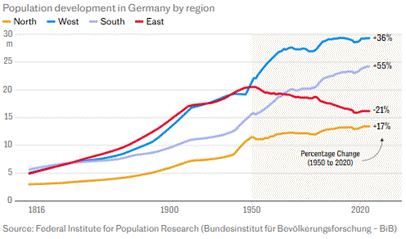
Chart credit: UK Telegraph
The population of eastern Germany has been quietly disappearing since 1950—down 21%, while the rest of the country plumped up nicely (west +36%, south and north +55% apiece). First the communists chased everyone out with shortages and secret police; then reunification finished the job by simply showing desperate Ossis5 where the jobs were.
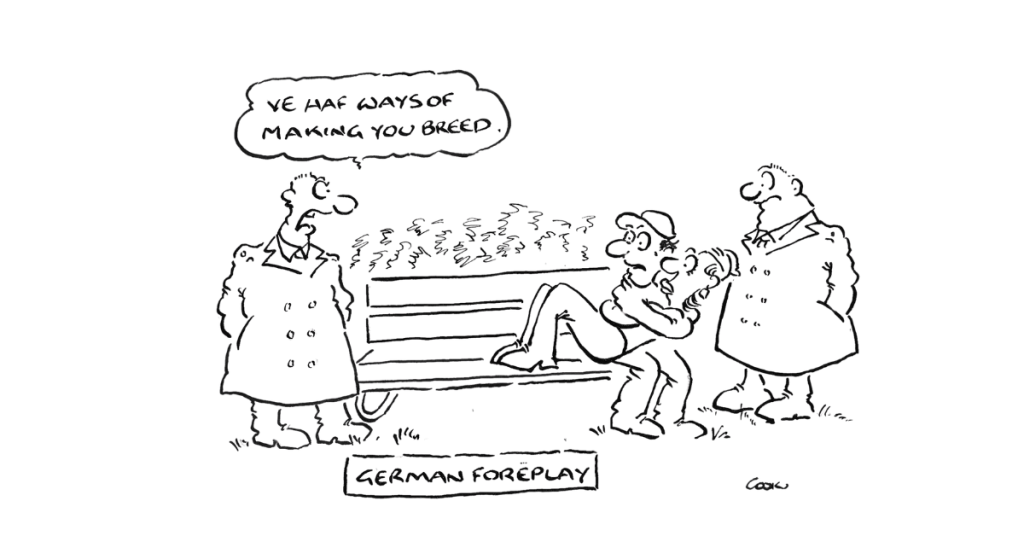
Enter the AfD, stage hard-right, with a solution: pay people to breed. Three-plus kids buys you tax-free income to €85,000, a €300,000 cut-rate loan, a €20,000 pension refund per extra child, and free nursery care. It’s less a family policy than a fertility subsidy scheme dressed up in nostalgia for a Germany that, per the manifesto, is otherwise facing “extinction.” According to the AfD, this is a fate apparently caused by “sexual deviations and non-reproductive lifestyles” rather than, say, decades of factory closures and empty apartment blocks.
The incumbent government of Sachsen-Anhalt (one of two states going to the polls in September) a centre-right coalition, points out, reasonably, that breeding bonuses today won’t create jobs for two decades. The electorate, unreasonably, seems not to care: the AfD is polling at 41%, eyeing its first state government.
So, the pitch is set: subsidise babies now, worry about employing them in 2046, and blame immigrants for a demographic hole dug entirely at home. Wry & Dry awaits the actuarial tables with interest.
5 Easterners, contrasts with Wessis.
8. Meanwhile, in Isfahan
On Monday this week, a yellow crane rose over Alikhani Square in Isfahan. Not for construction, but for the hanging of three young men whose crime was protesting their own government. The men joined at least 56 earlier executions this year alone, a grim ledger kept by the Washington-based Abdorrahman Boroumand Center, while the rest of the world checked its phone for something more Instagrammable.
Where, Wry & Dry asks, is the placard-waving fury that filled Swanston Street and Trafalgar Square with such reliable regularity? Where is Greta, so fluent in outrage over other outrages? Where is Grace Tame, never short of a hashtag? Their silence isn’t accidental; it’s selective, and selection is the whole tragedy.
These victims are Muslim, executed by a Muslim government; and that, it seems, is precisely the problem. Without a foreign villain to blame, the story doesn’t fit the script, and so it goes untold.
These victims were protesters who knew that their protest might mean death. The only risk to Greta and Grace, as each would see it, might be that the cameras failed.
So, the gallows go up. Again. The crowds quietly protest in Isfahan. Alone. And the forecourt of the Sydney Opera House stays conveniently, comfortably empty. Solidarity, it turns out, has geography.
Snippets from all over
Tsar Vlad might get pushy
Russian President Vladimir Putin could try to test NATO’s resolve with a limited assault on an allied country in the next few years, according to new U.S. intelligence reports that posit possible scenarios ranging from a cyberattack to a small-scale land incursion. (Wall Street Journal 7 August)
Wry & Dry comments: He’s getting bored with Ukraine stalemate.
Uber and robotaxis
Uber has pledged to spend more than $10bn expanding its robotaxi network, arguing its financial strength and more than 200mn customers will give it an edge in the intensifying race to commercialise autonomous vehicles. (Financial Times 6 August)
Wry & Dry comments: Uber plans to operate robotaxi services in at least 15 cities this year, as it races Alphabet’s Waymo and Elon Musk’s Tesla to become the first robotaxi service to launch in major markets.
Antisemitism increasing in New York
Anti-Jewish hate crimes increased by 8.5% in New York City this year, New York Police Department officials said Monday, amid heightened levels of antisemitism around the world since the Oct. 7 attacks in Israel. (Wall Street Journal 4 August)
Wry & Dry comments: The comments of NYC’s anti-Israeli mayor haven’t helped.
Cuba in the dark
Cuba went dark for a fourth time in less than a month after its entire grid shut down. (The Times 4 August)
Wry & Dry comments: The US has restricted fuel supplies to the island in an attempt to break its communist regime. A shortage of spare parts is also causing Cuba’s energy infrastructure to deteriorate.
Infantino’s own goal
Gianni Infantino’s future as president of football’s governing body is in serious doubt after he pulled the plug on a divisive plan to spin out a new commercial entity from Fifa and sell a stake to investors. (Financial Times 3 August)
Wry & Dry comments: The perks, both disclosed and undisclosed, will be too much for him to self DCM.
It figures
- 1.8%: Eurozone. GDP growth rate in year to end June.
- 1.5%: USA. GDP growth rate in year to end June.
- 3.4%: Canada. GDP growth rate in the year to end June.
Who’s now laughing, Trumpster?
And to soothe your troubled mind…
“We have literally massive amounts of ammunition.”
Trumpster, on news that the opposite is true.
Wry & Dry comments: The opposite is true.
Disclaimer
The comments in Wry & Dry do not necessarily reflect those of First Samuel, its Directors or Associates.
Cheers!