It’s a royal week. Tantrum foreign phase. AI works, until exam time.
Wry & Dry: a cynical and irreverent review of the week in politics, economics and life. For intelligent Readers who disdain the trivial.
Investment Matters
Company profit season continues, with news that Reliance Worldwide, one of the largest holdings in clients’ portfolios, received a takeover proposal. This followed EQT’s bid for Cleanaway only days earlier. Two of our largest holdings have therefore attracted takeover proposals within a week.
Craig and his team deeply report on:
- BlueScope Steel
- QBE
- Seek
- Amcor
- Reliance Worldwide
More generally, reporting season produced increasingly clear evidence that the domestic economy is slowing.
For the more complete picture, please click here
1. Wry & Dry’s ponderings…
Once again, a scandal in Victoria dominated the media. But not Wry & Dry’s scratchings; misbehaviour by footballers will not push aside more important matters. Such as Prince Harry and Princess Princess returning to the bosom of his family. So to speak. Elsewhere… Premier Carroll U-turns into a royal commission. Even more data to confirm that Victorians are the most unhappy about their government of all Australians. Trumpster’s tantrum phase foreign policy. AI works, until exam time. Taylor Swift is a public safety hazard. And notable DCMs.
2. London, where there are more cameras
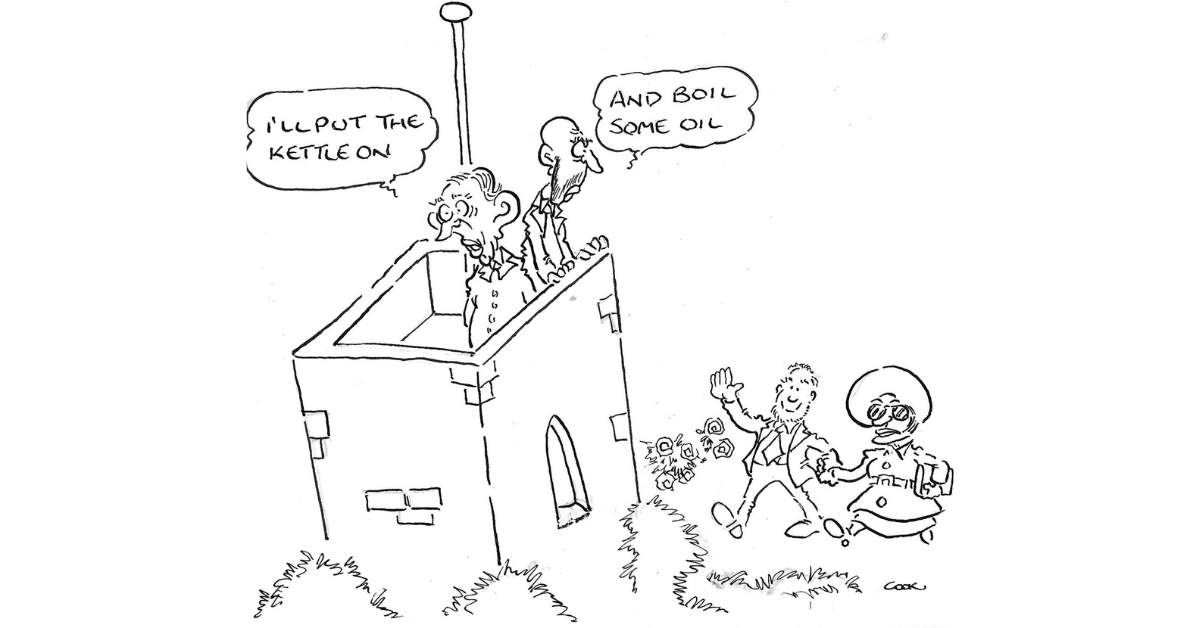
Harry and Princess Princess are returning to Britain. Not permanently, not officially, but close enough to remind everyone they still exist. The Montecito mansion stays. The Portugal golden-visa bolthole stays. But now there’s also an English base, because nothing says “seeking privacy” like maintaining three residences across two continents and a school-run for the children.
The timing, purely coincidental, arrives as Princess Princess’ business (As Ever) needs a publicity refresh and the couple’s stateside relevance and cash-at-bank have been quietly fading. A UK return conveniently generates headlines Montecito never could. Welcome home, presumably, to wherever the cameras are.
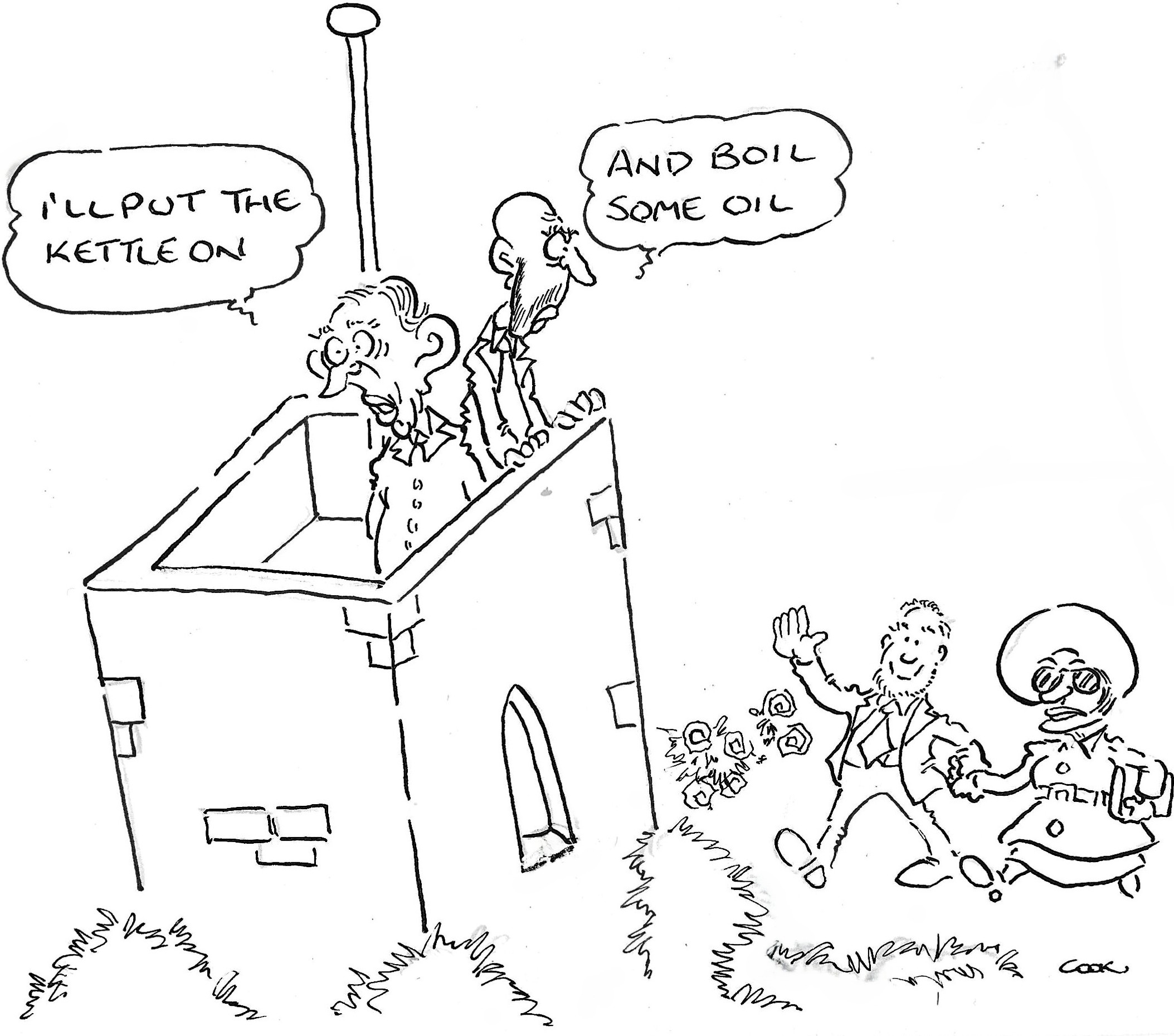
And the cameras will be wherever Netflix has decided is best for the docuseries: the arrival at Heathrow (at the baggage carousel), moving into the new home (touchingly being greeted by the new neighbours) and at the first school drop-off (tears from Harry hugging the children, Princess Princess waving to the crowds).
The Brits: “What have we done to deserve this?”
Nigel Farage: “What, more unskilled migrants.”
Fergie: “I too, am returning. Please arrange the limmo.”
Tsar Vlad: “I said there would be consequences for supplying Ukraine with drones.”
3. Another Royal event
“Nothing and no one is off limits,” declares Premier Carroll. A bold pledge from a government that spent nine years mastering the art of limits, particularly around IBAC’s questions. And this from the man who five months ago stood up in the Victorian parliament and dismissed calls for a royal commission.
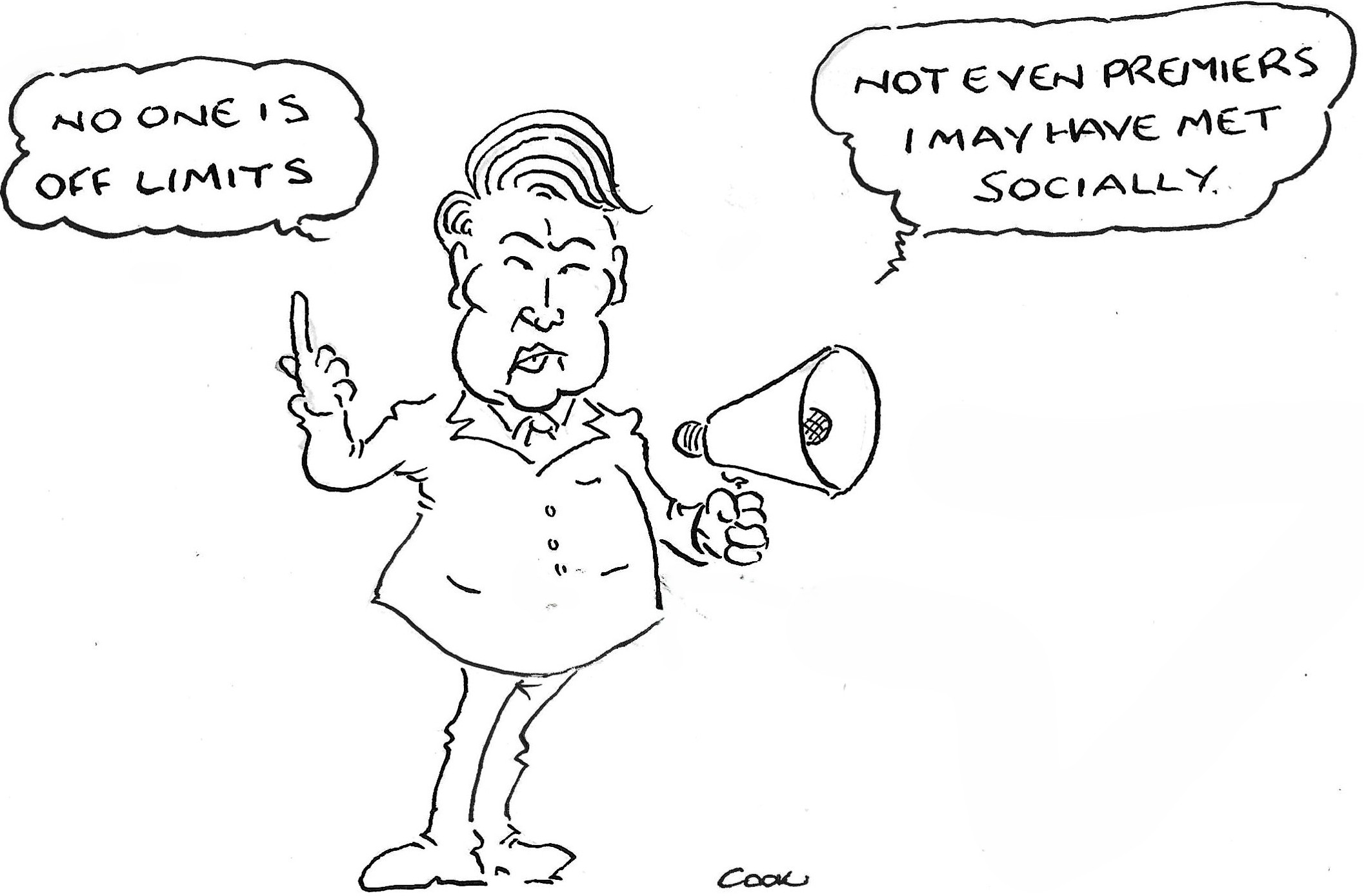
Now former South Australian Chief Justice Kourakis gets to spend months politely asking Daniel Andrews and Jacinta Allan why the CFMEU managed the Big Build like a franchise operation. And why somehow, always, they cleared everyone of everything.
Mick Gatto, that professional mediator, ever the optimist, says he’s “very happy to appear to exonerate myself”; clearly not understanding that he cannot exonerate himself. Provided, of course, the commission “is run fairly,” presumably by his definition.
Carroll desperately wants Victorians to believe curiosity has finally arrived at Spring Street. Convenient timing, given the election is in November and the last two premiers who might answer awkward questions have already left the building.
Nothing off limits, indeed, except accountability while it still mattered.
4. Tantrum phase of foreign policy
Trumpster’s foreign policy has entered its tantrum phase. Unable to bomb Iran into submission or coax it to the table, he’s redirected his fury toward more manageable targets.
Consider South Korea, now punished with scaled-back joint military drills for insufficient Iran solidarity. It is unlikely that Trumpster recognises the irony: his fawning toward Kim Jong-Un and North Korea’s nuclear belligerence and then Iran’s nuclear power ambitions.
And Oman, now threatened with being bombed “the shit out of” for the crime of negotiating shipping terms in the Strait of Hormuz. The very same strait that Trumpster insists, falsely, America already controls.
This is what strategic exhaustion looks like: lashing out at a Gulf neutral because you can’t touch the actual adversary. Meanwhile the Gaza peace process has stalled under Netanyahu’s election-year cold feet, Kushner’s shuttle diplomacy has gone nowhere, and American pump prices keep climbing toward the midterm elections.
None of it moves Iran a centimetre. It does, however, confirm the pattern: when the big fights go badly, Trumpster picks smaller ones he can theoretically win. Even if the victim, in this case, is a sultanate mostly known for frankincense and diplomatic patience, not defiance.
5. But wait! There’s more…
Victoria’s new premier has been on the job barely a month and already achieved what Jacinta Allan could not: making things worse. Net approval sits at minus 33%, comfortably the nation’s worst, while the five-state average is minus 4%. Even the federal government, no stranger to public disdain, manages minus 14%. Victoria has out-failed Canberra, no small feat.
Y’see, a survey company1 has asked we-the-people about the various state governments and the federal government. It’s all about delivery of services.
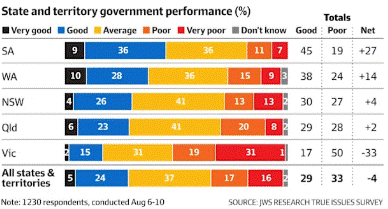
Chart source: AFR 20 August 2026
The comparisons are brutal. South Australia’s government net rating is plus 27%, WA scores plus 14%, Queensland shrugs along at average on everything. Even NSW, facing its own election next year, manages plus 4%.
Victoria, meanwhile, is criticised on cost of living, crime, the economy, transport and industrial relations — despite free kindergarten and half-price transport fares, proof that subsidies can’t outrun mismanagement.
Community safety sits at 27% against a 39% average, a fitting scoreboard for Melbourne’s crime headlines. And 54% of Victorians think their Big Build dollars are being wasted, versus 19% who don’t.
Other states are merely governing. Victoria is conducting a masterclass in how not to.
1 JWS Research True Issues Survey, cited in the AFR Thursday 20 August.
6. AI works, until exam time
The Economist reports that school students in China who use AI got better homework scores (+18%) in quicker time (+29%) than those who did not. But their exam performance was worse (-20%).2
In fact, there was a direct relationship between the homework scores and exam scores of non-AI users. Whereas for AI users, beyond a certain point, the relationship was sharply inverse.
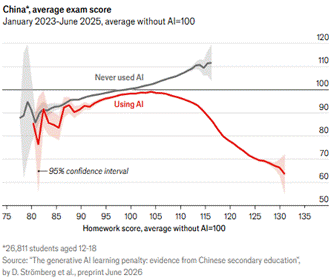
As usual, things are not always as they seem. The drop in AI-users’ exam scores was concentrated among students who had reduced their homework time i.e. had rushed their homework. But the exam scores of AI-users who spent as long on homework as non-AI-users was only little different to non-AI users.
2 The Economist 19 August 2026, citing “The generative AI learning penalty: evidence from Chinese secondary education”, by D. Strömberg et al. Some 26,811 students aged 12-18 were studied.
7. GST review – boredom alert
Miracle Morrison’s Western Australia GST deal is an exemplar of electoral-driven policy stupidity. Such stupidity type is not to be confused with either:
- vanity-driven policy stupidity exemplar: Dan Andrews’ underground railway loop; or
- well-meaning policy stupidity exemplar: NDIS.
[Boredom alert! Readers wishing lighter fare should skip the following.]
Readers know that the Commonwealth Grants Commission dolls out GST revenue to the states each year, on the basis that all Australians should get roughly “comparable levels of health, education, justice, welfare, public housing and other services.”
But the WA government has bleated long and hard that it didn’t get a ‘fair share’ of the annual GST. The reason for getting less GST was that it made a motza from iron ore mining royalties.
In 2018, the then federal Coalition government had four marginal seats in WA. Fearing a concerted populist campaign that might threaten his job security, Miracle Morrison agreed to guarantee WA a minimum GST distribution. In short, the result is that the WA government now runs massive budget surpluses at the expense of other states.
Independent economist Saul Eslake called the WA GST deal “the worst public policy decision of the 21st century thus far.” This is quite an achievement in a century that’s had plenty of competition.
He’s now been vindicated by the Productivity Commission, which found the arrangement needed re-arranging and has cost roughly $23 billion and counting, on its way to $60 billion, given to a state already funded at 113% of its needs.
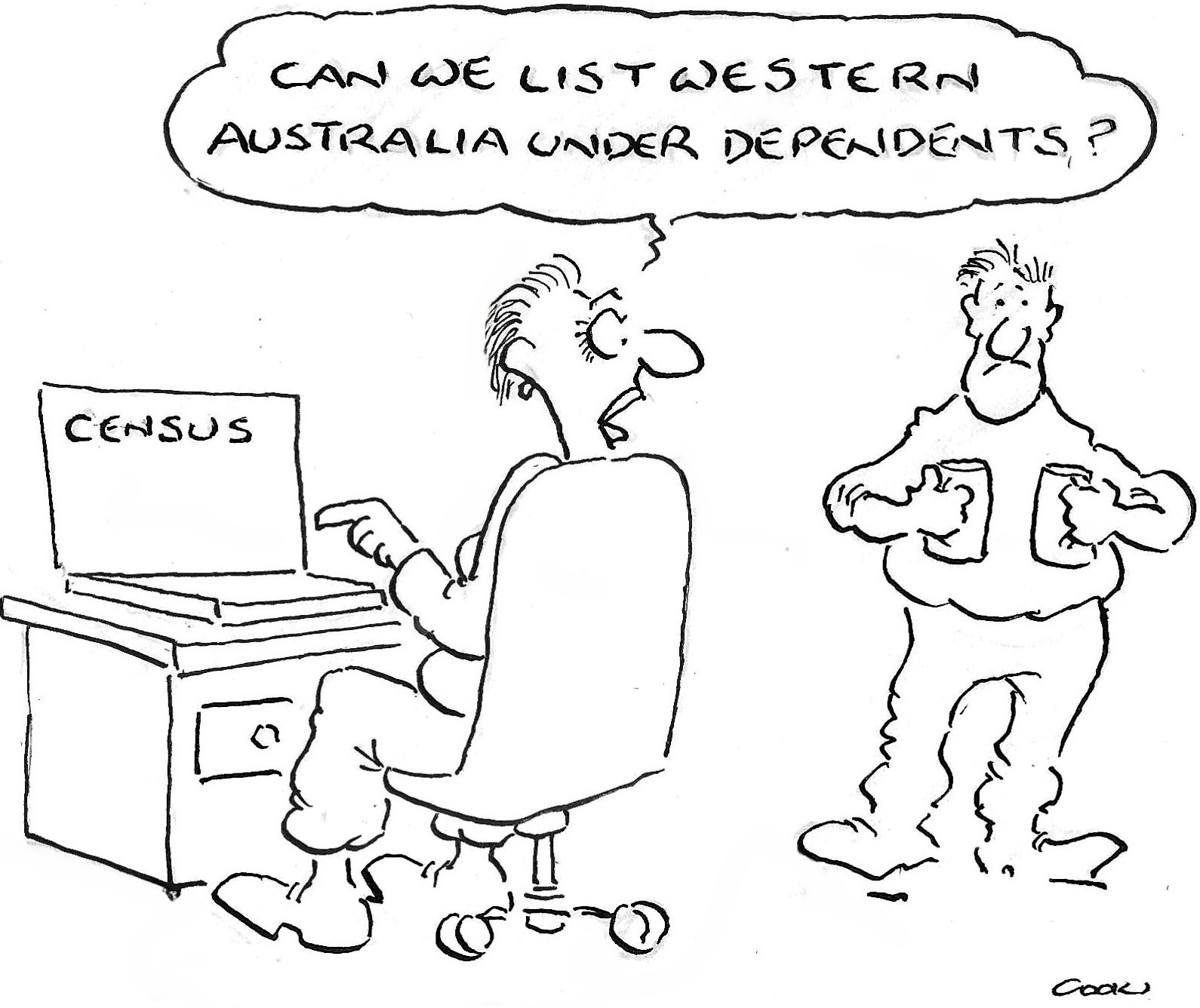
WA doesn’t run massive budget surpluses because it has made good decisions about taxes and its spending. It’s just an accident of cartography. If Northern Territory’s western border was pushed to the Indian Ocean, all the iron ore royalties would head to Darwin.
Uncle Albo, once happy to write “No Change To WA GST” on a reporter’s arm, now hedges toward “fair,” which in political dialect means “unchanged, but with better vibes.”
Eslake’s eight-year told-you-so moment has arrived. But nobody in Canberra has the spine to act on it.
8. Brassed off
Trumpets are now a national security threat to the USA. Yes, really. Y’see, this month, Trumpster released a notice proposing to add “brass-wind musical instruments” to a list of imports subject to new tariffs.
The logic, per the US Department of Commerce, is that too much imported brass leaves America unable to smelt enough tubas to make tanks come wartime. Melt a flugelhorn, forge a missile. Presumably.
It’s tempting to read this as pure trade policy, right up until you remember that Trumpster once revealed a childhood aptitude test declared him a musical genius, only for his father to veto the flute lessons.
Denied his own concerto career, he’s now apparently settling the score by taxing everyone else’s cornet.
Tariffs of 16.6% already apply. And are rising to 25%, because nothing says “protecting the homeland” quite like making a high school marching band budget cry.
Next on the list, presumably: glockenspiels, kazoos, and anything else capable of drowning out the sound of actual policy.
9. Taylor Swift – public safety hazard
Harvard Medical School has determined, with commendable scientific rigour, that Taylor Swift is a public safety hazard.8 Not, Wry & Dry hastens to add, through any personal recklessness, but by the simple act of releasing an album. Streams spike 43%, traffic deaths follow at 15%, and 182 Americans have apparently died at the intersection of fandom and cruise control.
The likely culprits: drivers fumbling phones, obsessing over dashboard displays, or getting a little too invested in the bridge of “Getaway Car” at 110kph. Young men in single-occupant cars were worst affected — proof that nothing overrides testosterone-fuelled overconfidence quite like a new Drake drop.
Naturally, correlation isn’t causation, and Harvard stops short of blaming Taylor Swift directly for anyone’s death, which is more restraint than the study’s headline writers showed. Precedent exists too: European football kickoffs have been linked to crashes in Singapore, care of lost sleep. So, the real message is: humanity’s relationship with entertainment remains lethal, one badly timed sing-along at a time.
8 Dr Vishal Patel, first author of the study based at Harvard Medical School and published in the journal Jama Network open.
10. Tsar Vlad issues a DCM
The veteran chief economist at Tsar Vlad’s state development bank, VEB, knows more than a little about what is going on in Tsar Vlad’s empire. Andrei Klepach told the truth quietly. In May, he made the fatal mistake of telling it loudly (but it was only reported last week): Russia is losing the war of attrition, falling behind Ukraine technologically, and heading for a “social crisis” that echoes 1917 rather than a mere recession.
The Kremlin’s response was swift and entirely predictable: a phone call from “up high,” and Klepach was given the DCM. Luckily, he lives in a ground floor apartment.
It’s a tidy demonstration of how Tsar Vlad handles inconvenient arithmetic: not by disputing it, but by removing the person doing the sums. The numbers Klepach cited are themselves damning — a budget deficit already double what was planned, warehouses destroyed, fuel shortages unseen since the Soviet collapse, and a central bank stuck at 14% interest rates trying to contain the fallout.
Russia’s elite, it turns out, in private mostly agree with Klepach. They just know better than to say so in public. Which is precisely the problem he identified: an economy propped up by an illusion, managed by people too frightened to mention it’s cracking.
Shooting the messenger doesn’t fix the message. It just ensures nobody sends the next one.
11. FIFA issues a DCM
Continuing Wry & Dry’s DCM-theme, Kevin Lamour has received the DCM from his job as COO at FIFA. He said losing his job over calling out Gianni Infantino’s £20 billion World Cup fire sale would let him “sleep well tonight.”
Sixteen days later, he can sleep in, permanently. FIFA insists this was merely a “working relationship” that “ended.” This is the corporate equivalent of “it’s not you, it’s definitely you.”
The farewell email from secretary-general Mattias Grafstrom is a masterclass in saying nothing warmly: gratitude, respect, “significant change,” not one mention of the actual reason Lamour is gone. FIFA then added it would make “no further comment,” which is rich for an organisation that usually can’t stop commenting on its own magnificence.
Lamour joins Carlos Cordeiro, Infantino’s own adviser, who quit over the same scheme last month. This suggests that the proposed World Cup sell-off has claimed more executives than actual buyers.
Infantino, meanwhile, presses on undeterred, having demonstrated that at FIFA, transparency is optional but loyalty is mandatory. And dissent comes with a strict two-week notice period.
Snippets from all over
Evergrande founder gets life
Hui Ka Yan, the founder of Evergrande, once the world’s biggest property firm by sales, was sentenced to life in prison by a Chinese court for “multiple combined crimes”. (Economist 21 August)
Wry & Dry comments: Evergrande defaulted on $300bn of debt.
Iran lobs missiles at UAE
The United Arab Emirates halted all commercial and trade relations with Iran, accusing the country of firing two ballistic missiles into its territory. (Economist 20 August)
Wry & Dry comments: The sabres are rattling.
The magic trillions
Federal government debt surpassed $1 trillion for the first time yesterday, putting pressure on the Albanese government to rein in the budget deficit or risk an even larger share of taxpayer revenue being swallowed by interest payments. (Australian Financial Review 21 August)
Wry & Dry comments: On the same day, federal US debt ticked over USD40 trillion.
New cancer drug
The share price of Moderna, the US drug company, nearly trebled on Wednesday after it revealed a breakthrough in developing personalised cancer treatments, adding billions of dollars to its market valuation. (The Times 20 August)
Wry & Dry comments: “Late-stage trial results show melanoma treatment increased the time before the disease returned or spread when paired with Merck’s Keytruda.”.
Trumpster cuts back South Korean military ties
President Trump said Sunday he would “substantially reduce” joint military exercises with South Korea, touting his “very good relationship” with North Korean leader Kim Jong Un. (Wall Street journal 17 August)
Wry & Dry comments: So, North Korea has nuclear weapons, and that’s okay. But Trumpster doesn’t want Iran to get them.
It figures
- 4.5%: Australia. Unemployment rate, up from 4.4%.
- 5.3%: US. The yield on American 30-year Treasuries (i.e. bonds), the highest since 2007.
And to soothe your troubled mind…
“I always will love the UK … I feel a lot of support from the British public.”
The Duke of Sussex, sensing the feeling.
Wry & Dry comments: He was never good at self-awareness. Just 33% of Brits have a positive view of him. Meghan’s is 22%. Not surprisingly, Andrew Mountbatten-Windsor’s rating is 2%. Prince William rates at 76% and his bride at 74%.
Disclaimer
The comments in Wry & Dry do not necessarily reflect those of First Samuel, its Directors or Associates.
Cheers!