
CoAct · Company updates
Diraq, Autobarn and cheap fried rice – a quantum story

Copyright 2026 First Samuel Limited
The market
FYTD: ASX and Wall Street
Oct 2026 (MTD) · Australia -0.54% · US +2.19%
Source: IRESS · 23 October 2026. View original chart ↗
View chart data
| Period | Australia: ASX/S&P 300 | US: S&P 500 |
|---|---|---|
| Jun 2026 | 0.00% | 0.00% |
| Jul 2026 | +2.12% | -0.13% |
| Aug 2026 | +3.33% | +2.49% |
| Sep 2026 | +0.05% | +2.03% |
| Oct 2026 (MTD) | -0.54% | +2.19% |
The week: ASX and Wall Street
Week · Australia -0.58% · US -1.04%
Source: IRESS · 23 October 2026. View original chart ↗
View chart data
| Period | Australia: ASX/S&P 300 | US: S&P 500 |
|---|---|---|
| Mon | +0.43% | -1.09% |
| Tue | -0.34% | +0.41% |
| Wed | +0.16% | +0.28% |
| Thu | -0.43% | +0.58% |
| Fri* | -0.39% | -1.21% |
| Week | -0.58% | -1.04% |
Exciting updates from CoAct, and AGM updates
Fugazi
Last week’s Investment Matters reflected on our recent visit to Singapore, including the extraordinary levels of fugazi surrounding artificial intelligence, its potential applications and the enormous amounts of capital being committed to its development. As we observed, the distance between technological possibility and commercial profitability can be considerable, even if the promotional material suggests otherwise.
It seems the Australian share market has been getting an expensive lesson in fugazi. The spectacular failure of the proposed $44 billion Firmus float was followed this week by a dramatic sell-off in listed data centre operator NextDC, whose shares fell more than 40% following a substantial earnings downgrade. Apparently, even in the age of artificial intelligence, access to electricity, capital and customers still matters.
This week we are taking a slightly different approach to Investment Matters, stepping away from the daily movements of the share market to examine one of our longer-term, less familiar investments.
Diraq?
In 2023, we invested in CoAct, an early-stage investment fund that provides exposure to a collection of privately owned, predominantly Australian businesses. The investment has progressed exceptionally well, with a substantial 40% uplift in valuation recorded at 30 June 2026, and we expect further gains in FY27.
We will explain how CoAct operates, why we believe this style of investing complements our listed equity portfolios, and introduce two of its investments. Diraq is developing silicon-based quantum computers, potentially bringing a new generation of computing technology closer to commercial reality. EatClub, meanwhile, has a more immediate proposition: helping restaurants fill otherwise empty tables through dynamic pricing while giving diners substantial discounts.
Two very different businesses, and useful examples of the opportunities available beyond the listed share market.
Meanwhile, October brings its annual flood of company announcements associated with AGM season. Amid the customary chairman’s addresses, remuneration discussions and optimistic outlook statements, there have been some genuinely useful updates on the operating performance of companies in our portfolios.
We have been pleased with developments at several of these businesses, although progress remains uneven. We conclude this week’s edition with brief observations on Bapcor, Santos, Cleanaway, Healius, Origin Energy, Mirvac and Garda Diversified, focusing on what has changed and what it means for our investment outlook.
CoAct: an alternative investment
How it works, what it does
CoAct Capital is a business that manages early-stage venture capital funds. Its first fund, Fund I, invests in private, predominantly Australian technology companies, typically by leading their Series A round: the first major institutional raise, once a business has proven its product and won early customers. CoAct’s four partners take board or observer seats in most of the companies they back and work alongside management on strategy, hiring and future capital raising. We hold our investment as an unlisted security in clients’ Alternatives Investments sub-portfolios.

Fund I is structured as an Early-Stage Venture Capital Limited Partnership (ESVCLP), a government-supported structure that offers investors a tax offset of up to 10% on contributions and concessional tax treatment of qualifying gains. Like most venture funds, it does not draw all of its investors’ commitments at once; it calls capital as investments are made. With a further 13.1% of commitments due on 23 October, 76.2% has now been called. That leaves roughly a quarter still to be drawn for new investments, follow-ons in existing companies and fees. The fund holds ten companies, has signed to lead an eleventh, and expects to add a couple more before its investment period closes in early 2027.
Why it complements our listed portfolios
Many of today’s most dynamic businesses stay private for far longer than they once did. In the US, the journey from founding to a share market listing now takes around 15 years. By the time such companies list, much of their early growth success has already accrued to private investors. Venture exposure gives clients a share in that earlier stage, with returns driven by the progress of individual businesses rather than by daily market sentiment.
The current environment also favours investors able to lead funding rounds. In Australia, the number of Series A rounds, and of the larger rounds that typically follow, has fallen to between a third and a half of 2021–22 levels. Less competing capital means more selective entry and better terms. Importantly, CoAct shares our scepticism of fashionable labels: for every AI company it reviews, it asks whether the business’s advantage would survive better AI models, and what it is being asked to pay for it.
The trade-offs are real. Venture investments are illiquid and long-dated, valuations are set periodically rather than by a market price, and returns tend to be concentrated in a small number of successful companies. These characteristics need to be weighed against the potential returns.
The Fund’s performance so far has been very pleasing. We saw a substantial 40% uplift at the end of June 2026. We expect further uplift through FY27.
These gains are valuations, not cash. No capital has yet been returned to investors. That is normal at this stage: industry data shows most funds of this vintage have yet to make a distribution. But in time – these investments typically last from 5 -8 years; the companies will be sold, and cash will be returned to unitholders.
As is typical in venture, a few companies are doing most of the work. Including a new investment this week, the fund has invested in 11 ventures. Two, Diraq and EatClub together account for about half of the portfolio’s value and roughly three-quarters of the gain to date.
Diraq: quantum computing on silicon
Quantum computers harness the behaviour of individual electrons and atoms to tackle problems far beyond the reach of conventional computers, with potential applications in drug discovery, materials science, and cryptography. The difficulty is building them reliably and at scale.
Diraq, which originated at UNSW, is pursuing a silicon-based approach, the same material used in conventional computer chips. Its quantum processors are designed to be manufactured in existing semiconductor factories, and it works with partners including Intel, imec and GlobalFoundries.
Diraq’s quantum computing chip
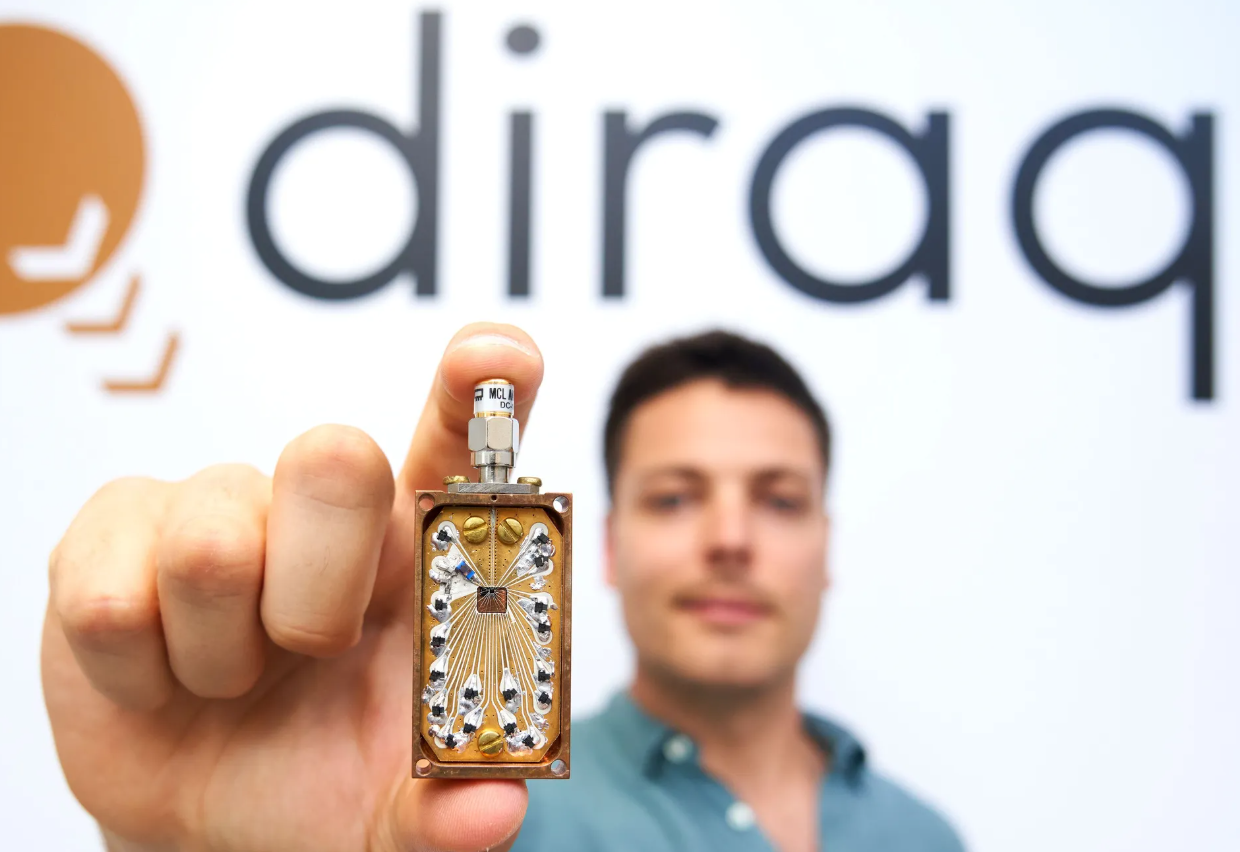
On 7 October, the US Defence Advanced Research Projects Agency (DARPA) accepted Diraq into Stage C of its Quantum Benchmarking Initiative, a program assessing which quantum computing approaches can reach commercially useful scale. Diraq was one of only six companies advanced from thirteen, alongside Microsoft, IBM, IonQ and PsiQuantum. Stage C offers up to US$300m of non-dilutive funding, with US$51m paid upfront. Diraq also received around A$10m of grant income in FY26, and a US government investment of up to US$38m is progressing through approvals.

Diraq is a small holding by ownership, at around 0.2%, but its carrying value has already risen to A$7.2m from A$1.33m invested. The DARPA decision came after the 30 June valuation date and is not reflected in those figures. Quantum computing remains a long-dated proposition, and large-scale commercial revenue is still some years away. What sets Diraq apart is that demanding government customers are funding and testing its progress, rather than promotional material.
EatClub: filling empty tables
EatClub tackles a familiar problem for restaurants: tables that sit empty at quieter times. Venues use its platform to offer time-based discounts of up to 50%, priced dynamically, to bring in diners when they would otherwise have spare capacity. Diners find offers through the app and pay with a tap, while venues receive real-time reporting on how the offers affect their profitability. EatClub earns a commission from venues and is adding diner fees and partnership revenue.
The business operates across 11 Australian cities and the UK, and has now launched in New Zealand. Annualised revenue reached A$69.4m in August, up 176% on a year earlier and around seven times its level when CoAct invested. New partnerships with Commonwealth Bank and Woolworths have also launched.

EatClub is the fund’s largest holding, carried at A$13.6m against A$4.9m invested. Where Diraq is a long-term technology bet, EatClub is a business with an immediate commercial proposition and a rapidly growing revenue line.
Elsewhere in the portfolio
We were also interested in new information regarding other investments that we received as part of the September 2026 quarterly update
- Knocknoc. CoAct has secured a follow-on investment in the cybersecurity company’s US$7m round, led by US specialist investor Decibel, lifting its holding from about 4.5% to around 7%.
- Wellio. The newest addition is a student wellbeing platform for schools, where CoAct is leading a Series A of about A$3.0m. Wellio has built more than A$7.0m of annual recurring revenue on only about A$500,000 of equity raised, and has been cash-flow positive every year since founding, a quality we value highly.
Of course, in a portfolio, not all companies will be success stories. CoAct is candid about this. Aviation compliance platform OneReg is behind its revenue target after a large customer deferred spending. Financial advice platform DASH is resetting under a new CEO, and maritime intelligence business Starboard is searching for a new chief executive. These are smaller positions, and we will continue to monitor them.
Our view
This is a strong result. With Diraq’s DARPA progress and other developments since 30 June, we expect further gains in FY27, although venture valuations can move in both directions. The real test is still ahead: turning these valuations into cash through trade sales, secondary sales and later funding rounds. We will continue to report on the fund’s progress.
AGM Updates
Bapcor – Ongoing signs of recovery
We were particularly pleased with the momentum in Bapcor’s Trade and Networks businesses, which together represent approximately 72% of group sales. Bapcor manages retail brands which include Autobarn, AutoPro and Opposite Lock.
Bapcor brands include well-known retail businesses
Retail
Autobarn
What it does
An automotive accessories retailer offering car audio, car care, DIY parts and tools for everyday motorists and enthusiasts.
How Bapcor is involved
Autobarn is part of Bapcor’s Retail & Service segment, supported by the group’s integrated supply chain.
Retail
Autopro
What it does
An automotive aftermarket parts and accessories retailer, with local stores tailoring their product ranges to their communities.
How Bapcor is involved
Bapcor includes Autopro in its network of independent retail businesses, supplied through its integrated supply chain.
Retail
Opposite Lock
What it does
An Australia-wide network of specialist four-wheel-drive accessory stores, combining bulk buying power with nationwide support.
How Bapcor is involved
Opposite Lock is included in Bapcor’s Retail & Service segment and its Australia-wide distribution network.
The company’s AGM update on Thursday showed improving sales and margins in these core businesses, alongside strong cash generation and a further reduction in net debt to $116 million. Weakness in Australian retail is hardly surprising given falling house prices and continuing cost-of-living pressures. Following a deeply disappointing FY26, Bapcor is beginning to demonstrate the underlying value of its businesses and the benefits of its operational turnaround. Much work remains, but the early evidence is encouraging.
The announcement on Thursday saw the stock price rise by 14%
A simple business plan that reflects challenging conditions
Garda Diversified – An outstanding result from disciplined capital allocation
Fantastic news from one of the core holdings in clients’ Property Securities sub-portfolio. Garda has successfully divested all of its remaining industrial property portfolio at approximately book value, substantially above the value implied by its share price and our own conservative valuation metrics.
While the transactions will have near-term distribution and capital gains tax implications, the immediate value realisation is substantial and the medium-term opportunity potentially transformational.
Garda’s management has consistently demonstrated excellent capital allocation skills. It is now positioned to deploy substantial capital into an increasingly distressed Australian property sector, initially through attractive lending opportunities over the next one to two years, and potentially through direct investments as the downturn creates opportunities. Thursday’s 1:1 discussions with the senior team only reinforced our shared view of the best way forward.
We see considerable value in having both capital and experienced management available at precisely the point in the cycle when others may be forced to retreat.
Healius – Progress beneath the surface
Healius provided a welcome update at its AGM, with encouraging underlying pathology volumes and pricing trends. While the sector continues to face significant structural pressure, a sustainable resolution will ultimately require greater indexation of government funding to reflect rising operating costs. Meanwhile, Healius is tightening cost control and improving its balance sheet.
Following another disappointing year in FY26, we see significant value in the company’s pathology operations and considerable upside if management can translate these improvements into more acceptable earnings and cash generation. The CEO reiterated the FY28 goals of mid-to-high single-digit EBIT margins, which we believe are both eminently possible and highly value-creating.
Mirvac – Investing through the property cycle
Mirvac’s quarterly update reflected deteriorating conditions in Australia’s residential property market, with weaker sales and increasing pressure on the development pipeline. These conditions are likely to persist in the near term, particularly as falling house prices and tighter household budgets weigh on buyer confidence.
Nevertheless, we remain attracted to the quality of Mirvac’s underlying property assets and the privileged position that new developments may enjoy under the changing capital gains tax landscape. We are investing through the cycle rather than attempting to pick its bottom, and continue to see long-term value in Mirvac within clients’ Property Securities sub-portfolio.
Origin Energy – More value becoming visible
Origin’s AGM reinforced our confidence in one of the portfolio’s larger investments. The company’s substantial battery investments are increasingly contributing to earnings and helping offset the impact of lower wholesale electricity prices, while disciplined capital expenditure and strong cash generation continue to improve its financial position.
Meanwhile, the growing scale and more visible commercial value of Octopus Energy and Kraken Technologies provide significant additional upside that we believe Origin’s share price does not fully reflect. Kraken’s direct exposure to AI benefits is clear, but the indirect benefits likely to accrue across the broader business will follow.
Santos – The cash flow arrives
Santos delivered an excellent quarterly update, with record production of 26.3 million barrels of oil equivalent, up 23% on the corresponding quarter, and an impressive US$1.1bn in operating free cash flow. Operational performance was broadly in line with our expectations, with volumes within 1% of our forecasts, despite minor delays in the Pikka project ramp-up in Alaska.
Most pleasing was converting years of substantial capital investment into cash generation, as the Barossa and Pikka projects increasingly contribute to earnings. We have been patient investors through the development cycle, and the latest result provides welcome evidence of the enlarged business’s considerable cash-generating capacity.
We have steadily increased our valuation of Santos as projects are delivered and elevated oil & gas prices have been realised.
Santos’s $4.5bn Pikka Project in Alaska Pikka saw oil production briefly reached minimum expected plateau rate in 1QFY27

Cleanaway – A takeover moves towards completion
Excellent news from Cleanaway, one of our largest portfolio investments, which has now entered into a binding agreement for EQT Infrastructure to acquire it at $3.095 per share, subject to adjustments for any further dividends.
A portfolio without any rubbish?
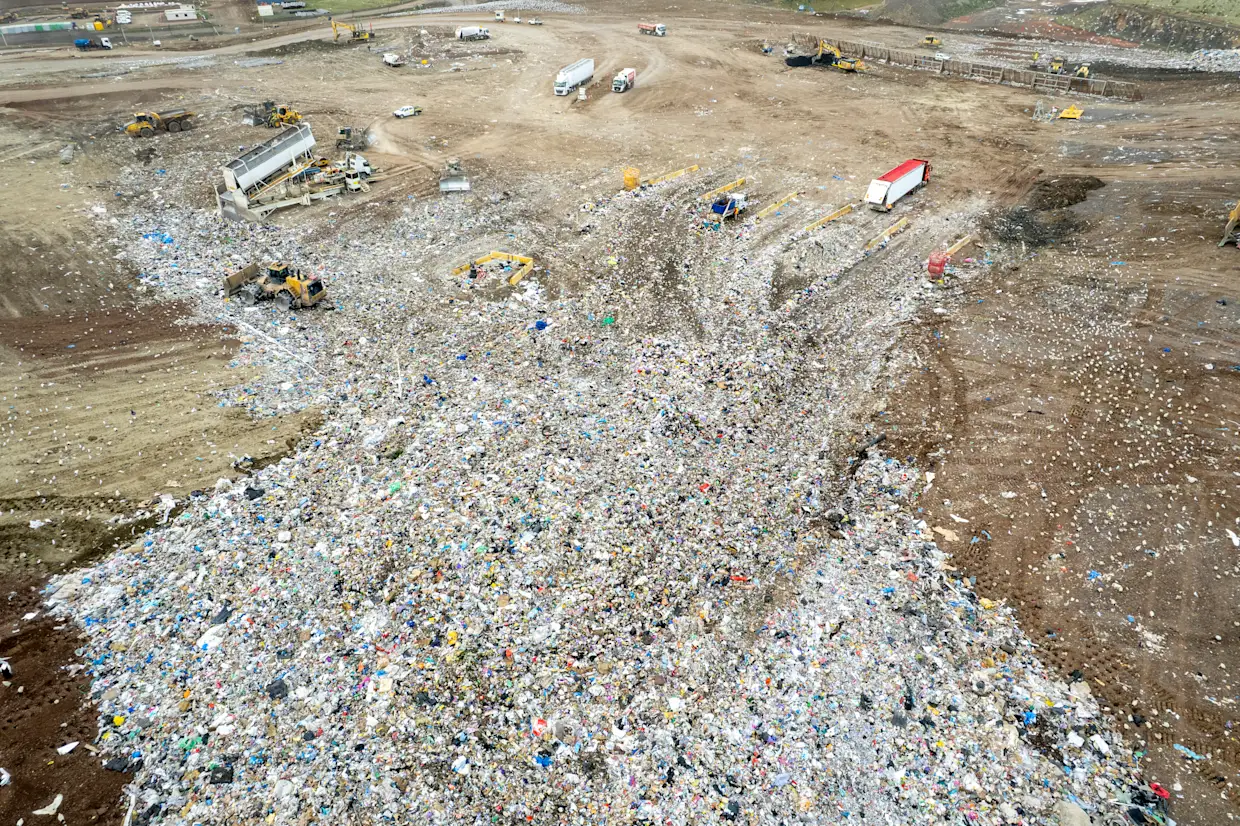
The agreement represents a significant step towards completion, expected by the end of March 2027, subject to shareholder, regulatory and court approvals. Cleanaway shares rallied towards $3.00, reflecting both the increased certainty of the transaction and the remaining cost and risk of holding the shares until settlement. The transaction reinforces a recurring theme in our investment approach: strategically valuable assets can attract substantial takeover premiums when listed market valuations fail to recognise their long-term worth.
We are sad to see this investment leave the portfolio and believe that it has been sold for at least 10 per cent too little. Over time the value creation from Cleanaway could have been substantially higher and this was underlined by the announcement that current operations in FY27 are tracking well.
Past performance is not a reliable indicator of future performance.
No assurance or guarantee is given that any forecast, target or projection will be achieved. Forward-looking statements are based on assumptions and information available as at 23 October 2026 and are subject to risks, uncertainties and factors beyond First Samuel’s control. Actual outcomes may differ materially.
Any advice contained on this website is of a general nature only and has been prepared without taking into account your personal objectives, financial situation or needs. Because of that, before acting on any advice on this website, you should consider whether the advice is appropriate for you having regard to your objectives, financial situation and needs.