Wry & Dry: a cynical and irreverent review of the week in politics, economics and life. For intelligent Readers who disdain the trivial.
Investment Matters
Company profit reporting season continues, with our views on:
- Life 360
- QBE
- SGH
To read Investment Matters, you can still just click on the link at the bottom of this week’s Wry & Dry. Or here.
Wry & Dry’s musings
Trumpster continues to provide content for the world’s leading publications, including Wry & Dry. This week, it has an Alaskan flavour (Bombe Alaska, anyone?). And Americans are drinking less alcohol and Canadians importing less American spirits. Who would possibly try to make the complex Middle East simple? And fail.
1. Alaska – the biggest deal in history
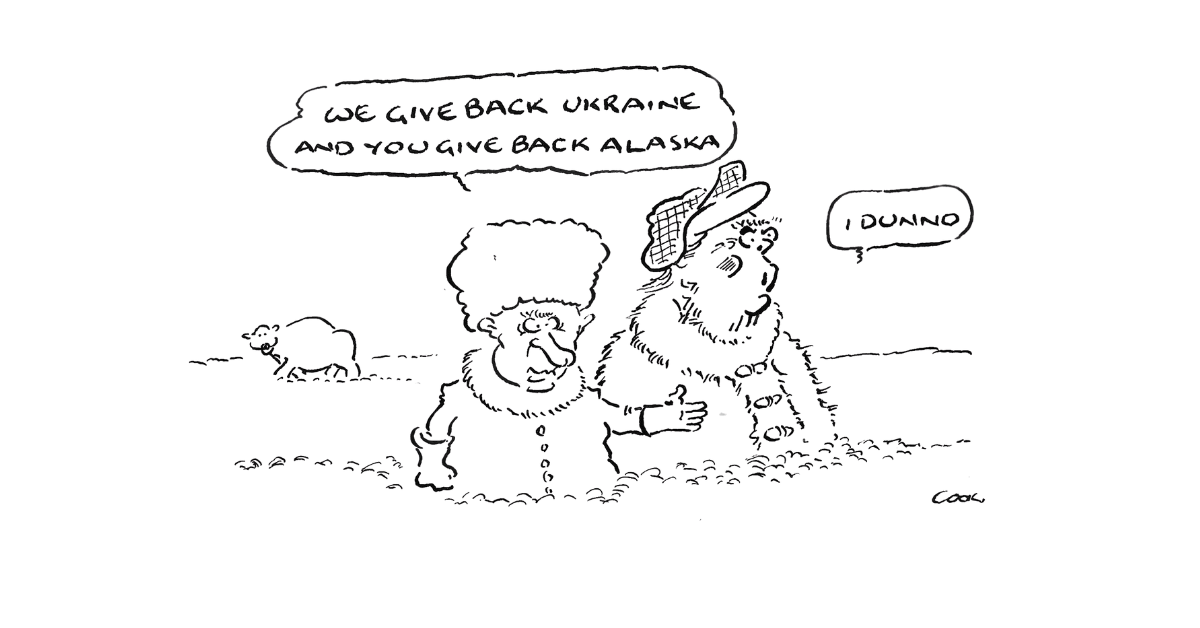
Trumpster will meet Tsar Vlad later today (early Saturday, Melbourne time) in the hope of enhancing his quest for a Nobel Peace Prize. He wants to solve the Ukraine war in the absence of the Ukrainian PM. And so the world fears the meeting will be another ‘Munich’, with another Munich Agreement.1
But it’s okay. The meeting will be held in Anchorage, Alaska. It is just not possible that there will be an ‘Anchorage Agreement’. Imagine a backwater city of 300,000 souls giving its name to such an iconic agreement. It is only America’s 63rd largest city, not even the state capital, with its only notable feature being that it is home to that intellectual giant of American politics, Sarah Palin.2
So, the summit will be little more than a photo opportunity. Y’see, Ukrainian President Zelensky and European leaders have since persuaded Trumpster not to make a Ukrainian deal. This will disappoint Trumpster. But he will be looking for a deal of some sort. Tsar Vlad knows this.
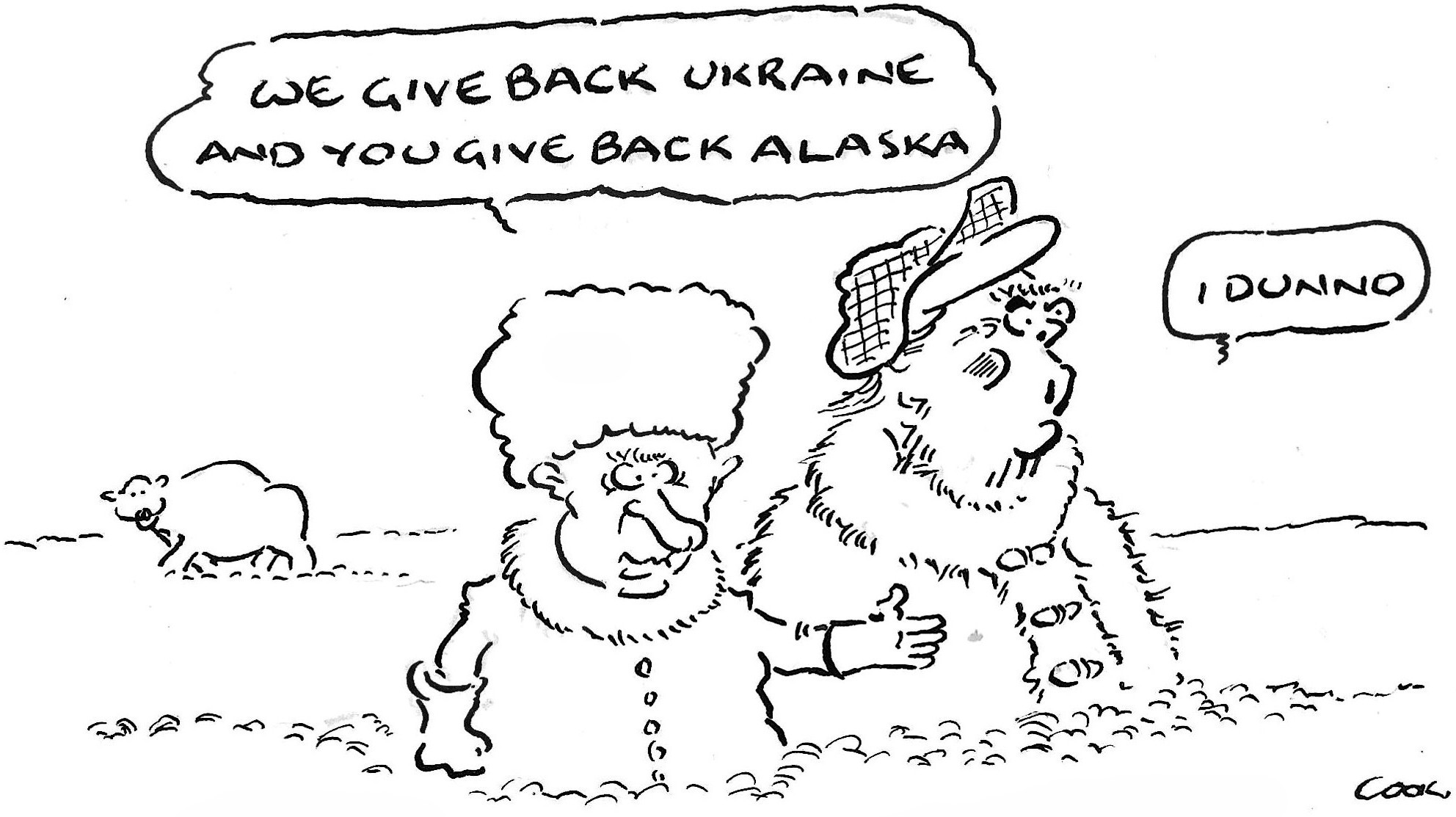
Readers should therefore expect that Tsar Vad will offer a deal: The Alaska Buy-Back. Tsar Vlad’s forebear Tsar Alexander II sold Alaska to America in 1867, for today’s equivalent of $150m.3
Whatever the price, Trumpster will be quick to announce that the sale would be the BIGGEST DEAL IN HISTORY. Of lesser importance would be that the sale proceeds would assist Trumpster’s budgetary problems. And imagine the selling commission that Trumpster would demand.
1 Munich was the venue of the 1938 meeting between Hitler and the Prime Minister of the UK and the President of France. The trio effectively agreed to give a large part of Czechoslovakia (Sudetenland) to Hitler, as long as Hitler didn’t take the rest. The Czechoslovakian leadership was neither present nor consulted. The UK PM, Chamberlain, famously returned to London waving the agreement stating, “Peace in our time!” In March 1939, Hitler took the rest of Czechoslovakia. In September 1939, Hitler began to take the rest of Europe. Chamberlain’s peace promise was shattered. Never trust a dictator.
2 Palin was John McCain’s running mate in the 2008 presidential election. Arguably the stupidest person to ever be in such a role. Tina’s Fay’s impersonation of her on Saturday Night Live made Palin a laughingstock. McCain lost the election to Barack O’Bama.
3 The contract of sale was written in English and French, without Russian. There was no stamp duty on the contract.
2. Naming rights
The Trump Route for International Peace and Prosperity (TRIPP) is soon to open. And it is:
- Any planned road link between Canada and US, in an effort to re-open friendliness;
- A planned 63 kilometre bridge & tunnel across the Bering Strait, linking Alaska with Siberia; to proceed if Trumpster arranges peace in Ukraine – he gets naming rights;
- A planned 82 kilometre bicycle tunnel, linking Gaza with the West Bank, and going underneath Israel; to proceed if Trumpster arranges peace – he gets naming rights; or
- A 55 kilometre American operated transport route across Armenia linking Azerbaijan to its enclave, Nakhchivan?
Close, but no cigar. The correct answer is d). TRIPP actually exists. It is the final part of a peace deal agreed last week between Armenia and Azerbaijan, which have been fighting each other for 35 years.
To make the deal work, Armenia has leased the corridor to… the US for 99 years. The capitalist US will hire contractors to run the route. This part of the world was once in the bailiwick of the Soviet Union. Now, the USA has an interest. Russia seemed acquiescent.
But Iran is very grumpy. It had proposed the Aras Corridor, running on its side of the border with Armenia, i.e. south of the Aras river. TRIPP will run along Iran’s northern border, on the Armenian side of the Aras river. For Readers who think that the Caucasus is a meeting of the Labor party MPs, Wry & Dry provides a map. The road is coloured blue, within the green oval, below.
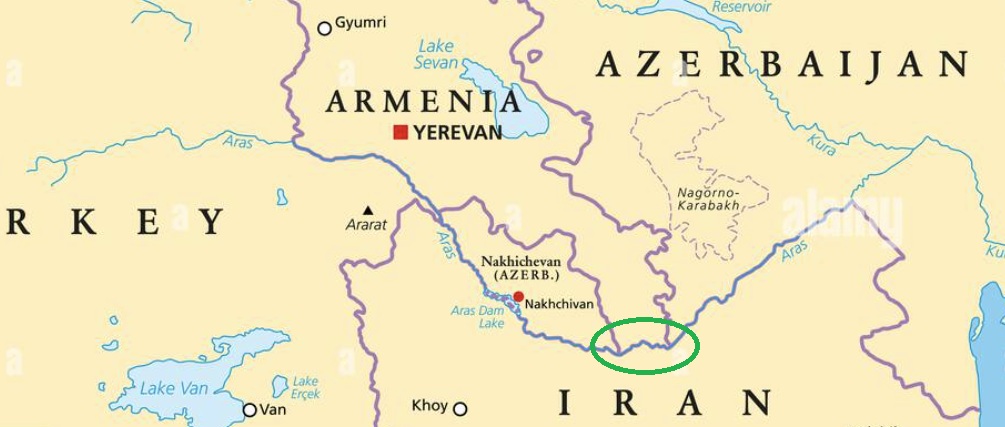
Source: A map Wry & Dry found on the internet. He drew the green oval.
A minor planet in Trumpster’s orbit negotiated the deal, but Trumpster took the credit. Each of Armenia’s Prime Minister, Nikol Pashinyan, and Azerbaijan’s President, Ilham Aliyev, stated they would nominate Trumpster for the Nobel Peace Prize.
Only Ukraine and Gaza to go.
3. US alcohol industry under threat
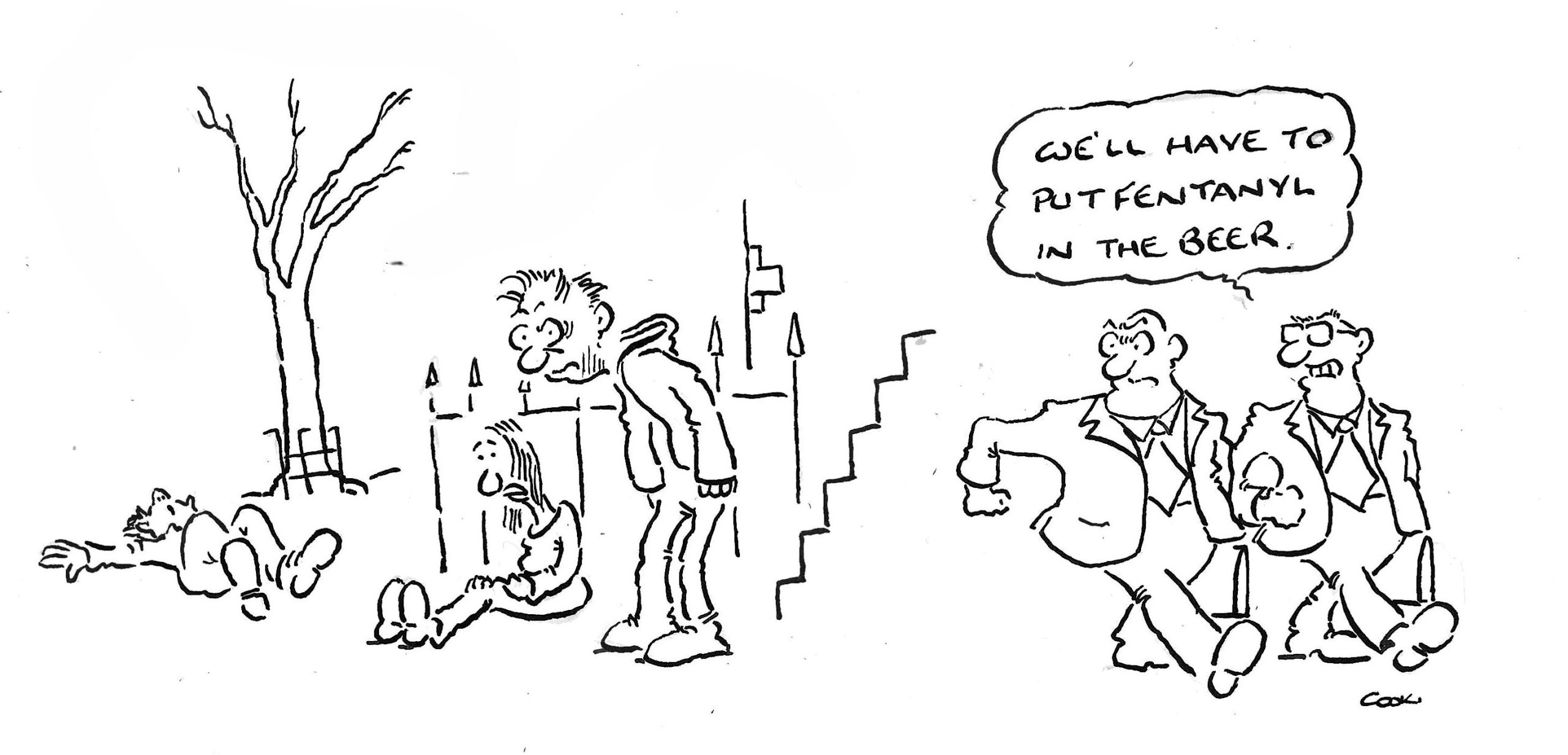
Firstly, it was the news that the share of US adults who consume any form of alcohol dropped to 54% last month – the lowest since records began in 1939.4
This figure is well below that for Australia: 68%.5 What’s going on?
Is it the rise in the use of cannabis? Or increase in obesity drugs, which decrease the urge to drink alcohol? Perhaps the reasons are economic: high interest rates, less discretionary spending, etc. Either way, it’s bad news.
Secondly, it gets worse. US exports of US distilled spirits to Canada are down 62% since Trump’s (a) annexation threats and (b) tariffs caused Canadians to get grumpy. And buy elsewhere.
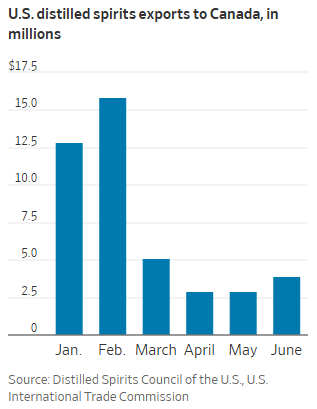
Chart source: Wall Street Journal
And sales of Californian wine to Canada have dropped by about 10% this year. This might get messier.
4 Source: US Gallup poll.
5 Source: Roy Morgan.
4. Making complexity simple. And failing.
The President of France always needs to feel relevant. Readers will remember M. Macron striving to be relevant by attempting to negotiate with Tsar Vlad early in the Ukraine war. And trying to make the complex simple.
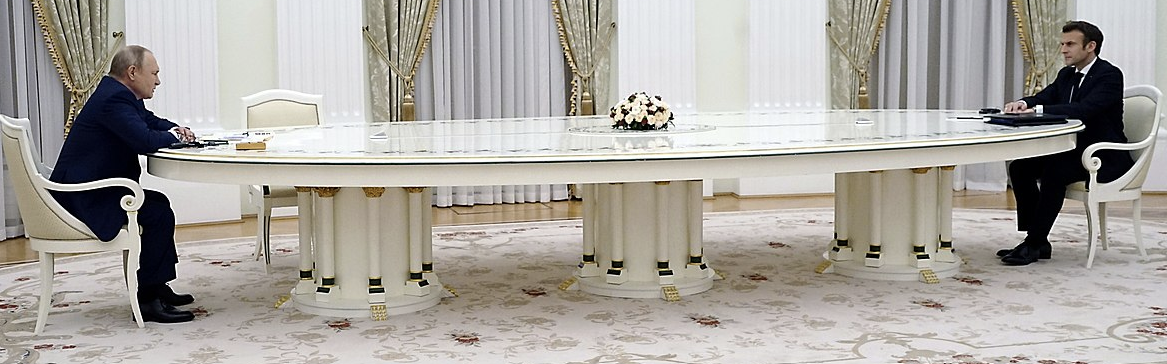
Tsar Vlad and M. Macron in a photo shoot for Moscow Home Beautiful
He left with his escargot between his legs.
Two weeks ago, again trying to portray himself as a latter-day Joan of Arc, he responded to the shameful humanitarian disaster in Gaza with France’s unconditional recognition of Palestine. And the Prime Ministers of UK and Canada followed suit.
The promise of a simple solution to an amazingly complex problem was both daft and counter-productive. It is childish to suggest that recognition will help “build a pathway to peace.” Readers may wish to read article 10, below, for a history of the pathway since 1948.
Overlay the complexity of Israel/Palestinian history with (a) intransigent leaders on one side; (b) a terrorist collective on the other; and (c) tens of thousands of shelter-less refugees in need of humanitarian aid in the middle.
The sweet music of increasing national recognition won’t help those in the middle, it won’t disarm the terrorists and will only harden the hearts of the intransigent.
Which brings Wry & Dry to Albo. If Palestine really needed his attention, his assistance and Australia’s recognition, then surely if he had a spine, he would have announced recognition before France, UK and Canada. Now he has just followed others.
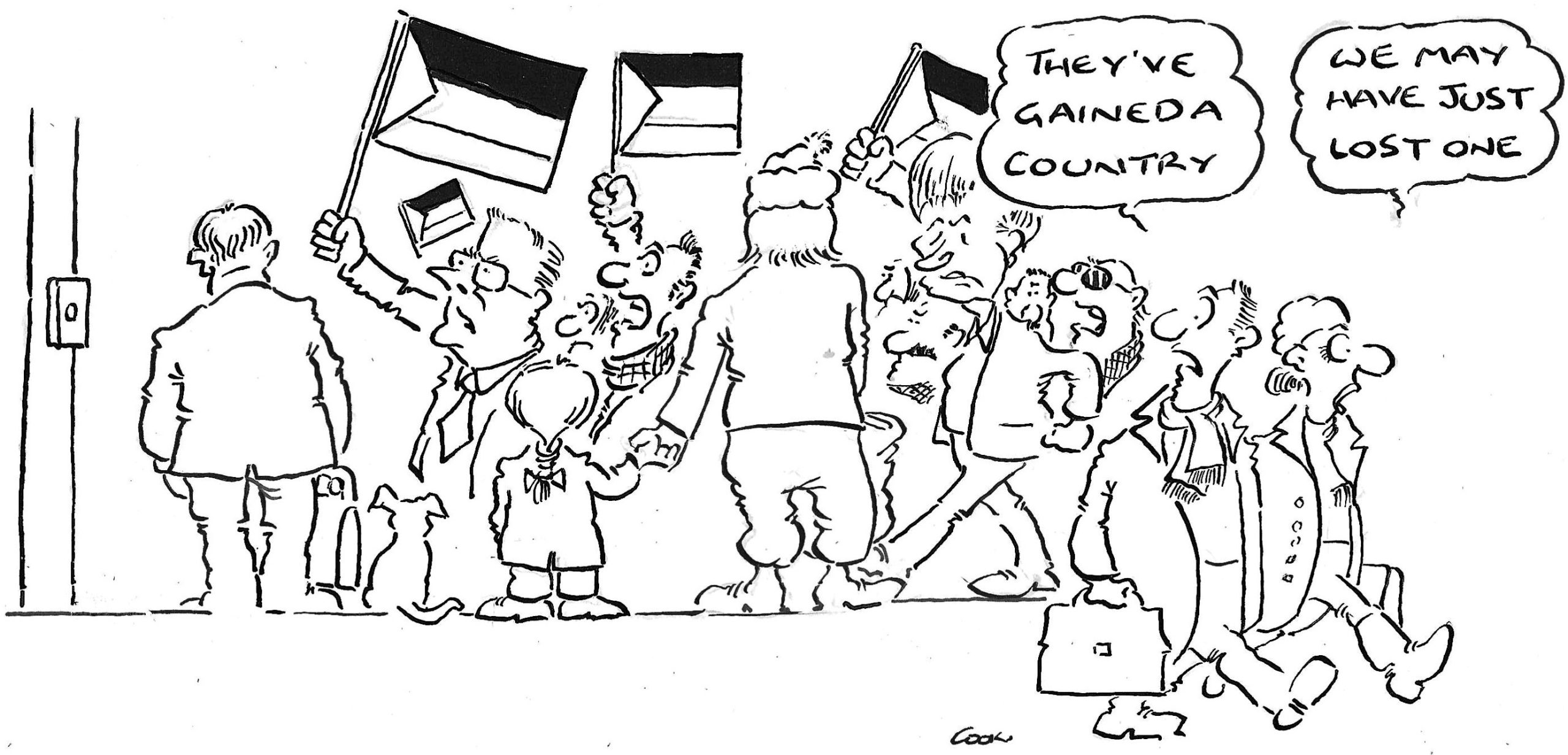
He knows that his decision will make no difference to what happens in Gaza. Did he really think that the massive problems of Gaza and the West Bank would be solved by a media release? Or indeed that it might move the needle in negotiations.
He should know that Mahmoud Abbas, the 89-year-old leader of the Palestinian Authority (the nominal government of the West Bank) and who is 20 years into a four-year term, has no intention of fulfilling conditions that Albo asked. Even former Israeli Prime Minister Ehud Olmert, an entrenched and vehement critic of Netanyahu, said that Albo should have waited until key conditions had been met.
Had Albo been more spineful, as it were, he would have faced down internal pressures and said recognition will come only when certain conditions (not promises) are met.
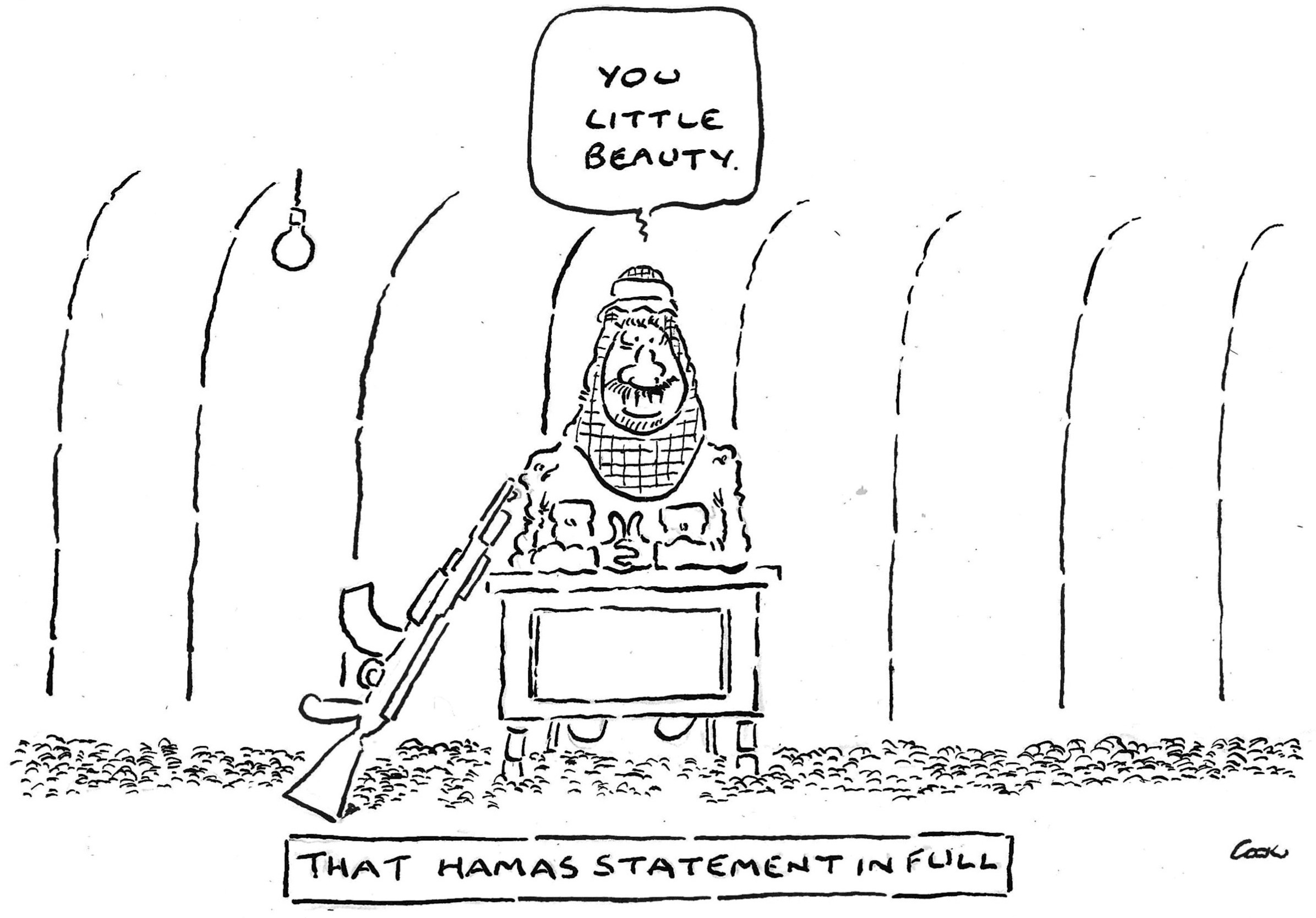
He had an opportunity to show a measure of statesmanship, an event that a leader rarely faces. And decide not to provide succour to a terrorist organisation. But he did.
5. Unproductivity
‘Productivity’ is the word dominating coffee-table talk and conversations in pubs across the nation. Well, maybe not.
But it should be. Australia’s lamentable productivity growth is the driver of the fall in Australia’s standard of living since about 2016. It’s certainly on the mind of the government, which is why Grim Jim is holding a Productivity Roundtable next week. More of which later. But for now, just look at the data.
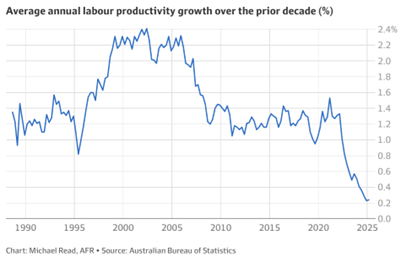
It shows that productivity has remained, more or less, flat in the last 10 years. The RBA used to have a productivity medium-term growth potential of 1% p.a. A somewhat Pollyanna forecast. It has now dropped that forecast to 0.7%.
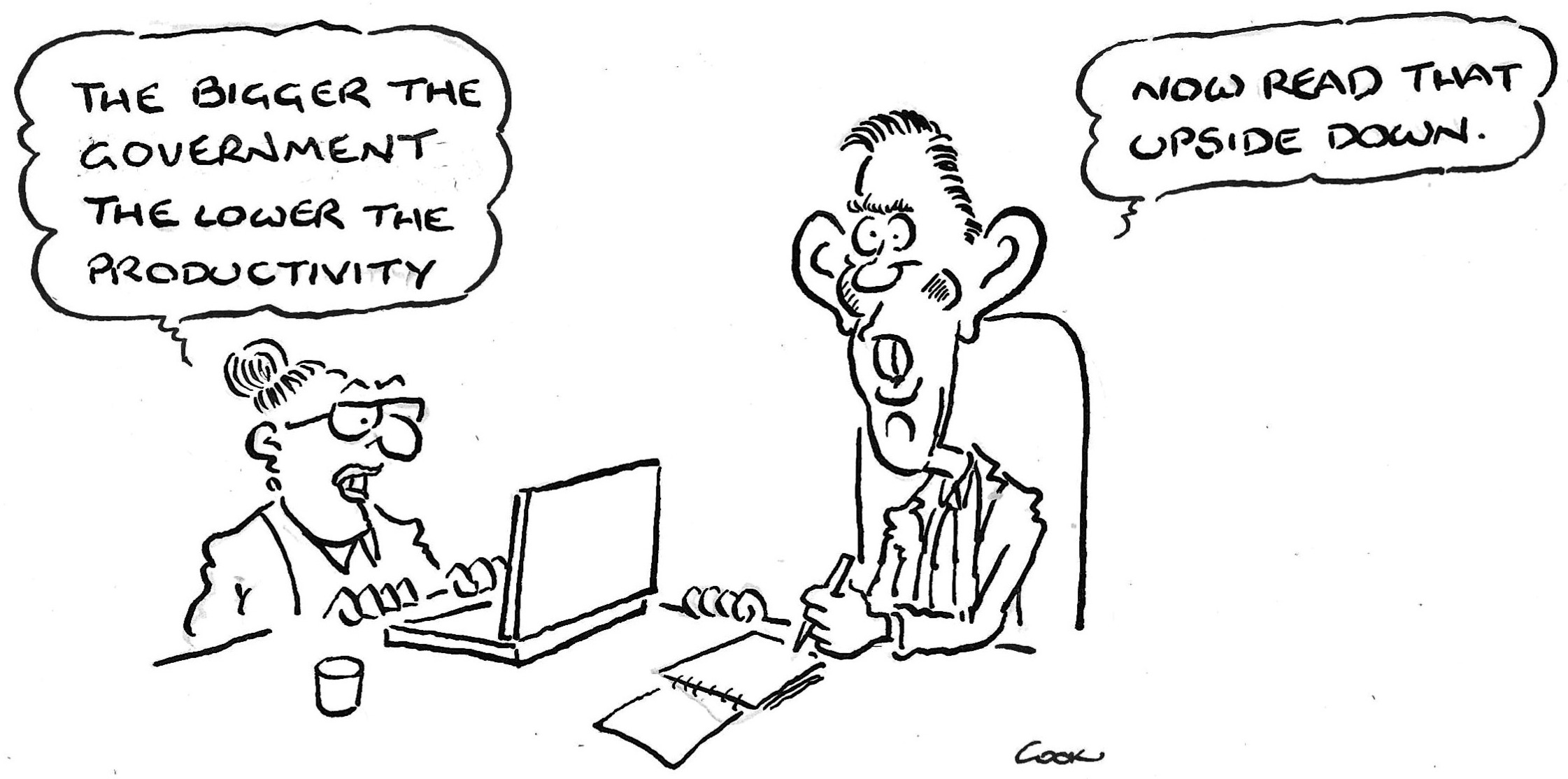
The outcome of this is that the economy can only grow at a mediocre 2%, somewhat less than the 3-4% p.a. enjoyed in prior decades.
The RBA is conceding that people will enjoy a slower improvement in living standards than their forebears. Economic growth per person and real income gains will be lower than past generations enjoyed.
But help is at hand! The Treasury forecasts that productivity growth will be 1.2% p.a. over the next decade. And that forecast is the one the Grim Jim has used to under pin his expenditure.
The problem is that if the RBA’s forecast is correct, the government’s budget balance will be about $40bn worse off in 2035.
Which forecast will Grim Jim use?
6. French finances getting embarrassing
The French are a competitive lot. Especially when they are compared to European neighbours. But embarrassment is not far away. It’s coming from Italy.
The interest rate at which a country can borrow is a sign of its mastery over its finances. The lower the better. And, on Wednesday, the rate on France’s 10-year government bonds rose to just 0.14% points lower than those of Italy.
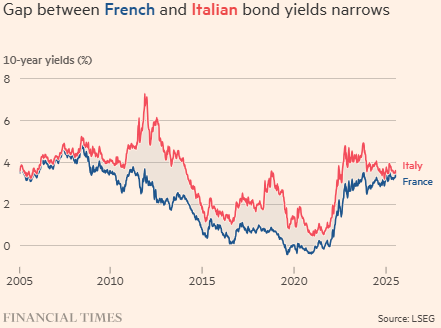
Source: Financial Times 14 August 2025
France’s budget deficit is 5.8% of GDP and getting worse. Italy’s is 4.3% and getting better. Months of political instability in France contrast with Italy’s three-party, right-wing coalition that has delivered a rare period of political stability and calmed initially skittish bond markets with its fiscal restraint.
M. Macron’s year is just getting worse.
7. Victoria: missed by that much
The Bankrupt State of Victoria has many reasons why it is virtually bankrupt. One is its inability to stick to its budget. For example, forecasting government employee growth and the resulting employee costs. The temptation of (a) employing more public servants than forecast; and (b) paying them more than forecast was too much to resist. Year after year.
So, in the decade since Chairman Dan got the top gig, state government employee expenses have risen at an average rate of 7.5% p.a
8. A quiet holiday in the Cotswolds
The very earnest Vice President of the USA, JD Vance, decided to holiday under the radar.
He chose the delightful Cotswolds in England. Just the place for a quiet break with his family. And hardly anyone noticed the hovering helicopter and the 19-vehicle motorcade in which he was immersed. Nor the plethora of photo journalists wanting to scoop the world with a photo of the man himself… fishing.
The question on Wry & Dry’s mind is what is it about these Americans? First it was Trumpster holidaying in Scotland, now JD Vance in England. Are there no holiday spots in the USA?
Appendix: A brief history of the struggle of Palestinians
Anyone who thinks that there is any easy, or quick, solution to this interminable mess should think again. Consider that it was in 1947 that Palestinian leaders (and the nearby Arab world) first rejected a two-state solution decided by the UN. Israel set about building a nation. Palestinian leaders did not.
After the 1948 war (in which Egypt, Jordan, Syria and Iraq attempted and failed to invade Israel), Gaza became, essentially, a part of Egypt until 1967. And the West Bank became a part of Jordan over the same period. Arab indifference meant that Palestinians lost 20 years in building a viable nation.
Arab states’ (principally Egypt, Syria and Jordan) desire for the destruction of Israel caused two wars (1967 and 1973), both of which Israel decisively won. It took until the 1978 Camp David Accords for a sense of peace to begin. In the meantime, Palestinians lost another 10 years of nation building opportunity, because of external actors.
But since then, internal actors bent on the destruction of Israel began to emerge, funded in part by external actors. To which Israel responded. This is where it gets really complicated. Essentially, since then, it has been a series of missed opportunities for a more permanent peace. Three more offers of a two-state solution were made to Palestinian leaders.6 Each they rejected, preferring the mantra that there is no legitimacy to a Jewish state. Forty more years of nation building have been missed.
Today, only 45% of Palestinians support a two-state solution.7 And, even worse: just 21% of Israelis believe that peaceful coexistence and an independent Palestine is possible.8
So, what chance of a successful two-state solution?
Alarmingly, 41% of Palestinians believe that ‘armed struggle’ is the best means of achieving Palestinian goals (ending the occupation and building an independent state).
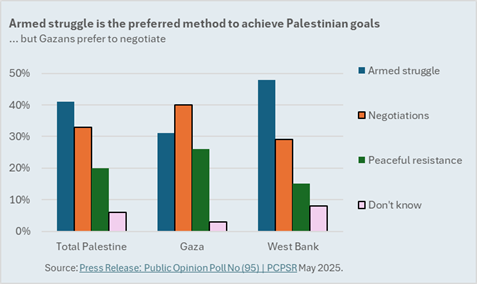
Curiously, it is West Bank Palestinians who prefer ‘armed struggle’ to other means. With the increasing number of Jewish settlements on the West Bank this is hardly surprising.
6 In each case the offer was essentially the same: a Palestinian state on almost all the West Bank (about 94% of it), with only the Jewish settlements adjacent to Jerusalem kept by Israel but with compensating land swaps from Israel proper; plus all of Gaza; plus a Palestinian capital in east Jerusalem.
7 Source: Palestinian Center for Policy and Survey Research, May 2025. (Press Release: Public Opinion Poll No (95) | PCPSR)
8 Source: Pew Research, June 2025. (Potential for Israeli-Palestinian peace: Israeli public opinion | Pew Research Center).
Snippets from all over
1. NDIS and 6-year-old boys
Australian children are flocking to the National Disability Insurance Scheme, with 16 per cent of all six-year-old boys now relying on it, as the government begins designing a new pathway to help families leave the rapidly growing $46 billion program. (The Age)
Wry & Dry comments: There goes the budgeted 8% p.a. growth in NDIS costs.
2. Trumpster appoints new BLS chief
Trump’s pick to lead the BLS, EJ Antoni, a fierce loyalist and cheerleader for the president’s tariffs and economic strategy, has only deepened the anxiety [following Trump’s sacking of the BLS’ boss after a grim jobs report]. (Financial Times)
Wry & Dry comments: Antoni was Trumpster’s second choice. Trumpster wanted the job himself, but didn’t have the qualifications.
3. Risky Hong Kong loans
Almost three-quarters of HSBC’s Hong Kong commercial property loan book was flashing warning signs by the end of June, as a prolonged slump in retail spending and sluggish demand for office space weighed on Europe’s largest bank. (Financial Times)
Wry & Dry comments: No surprises there.
4. Eggs to USA
SMG Capital, an American investment firm, bought Fabergé, the jeweller famous for its ornate eggs dating back to imperial Russia, for $50m. (The Economist)
Wry & Dry comments: Wait for the Trump Fabergé egg, to be called a TACO egg.
5. Charge, convict, deport
Foreign nationals convicted of crimes will be deported from England and Wales immediately after sentencing, under plans announced by Sir Keir Starmer’s government as it seeks to present a tough stance on border security. (Financial Times)
Wry & Dry comments: Nationals from the list of 23 nations, whose human rights claims have been rejected, will be returned to their home countries and only permitted to participate in appeal hearings via video link.
It figures
- 0.25% points: Australia. The cut in official interest rates by the RBA. To 3.6%.
- 4.2%: Australia. Unemployment rate in July, down from 4.3%.
- 2.7%: USA. Inflation in year to end July. Unchanged and better than expected.
- 37: UK. The number of successive months in which job vacancies had fallen.
And to soothe your troubled mind…
“Of course, how could we not? We’re girls.”
Jennifer Aniston (apparently an actress), when asked by Vanity Fair (apparently a glossy magazine) about swapping stories with Gwyneth Paltrow (apparently another actress) about Brad Pitt (apparently an actor), to whom both were engaged. But not simultaneously. Apparently.
Wry & Dry comments: Possibly shattering the image of the modern woman.
Disclaimer
The comments in Wry & Dry do not necessarily reflect those of First Samuel, its Directors or Associates.
Cheers!
Read this week’s edition of Investment Matters.