Wry & Dry: a cynical and irreverent review of the week in politics, economics and life. For intelligent Readers who disdain the trivial.
Investment Matters.
This week…
- The calm before the storm? What to expect from company profit reporting season.
To read Investment Matters, you can still just click on the link at the bottom of this week’s Wry & Dry. Or here.
Wry & Dry’s musings
If you are a national leader with an approval rating of 19%, why not leap upon a populist issue to boost your rating. Tsar Vlad’s flagship still in the workshop. And who’s now laughing about Brexit?
And Monique Ryan once again is hung out and Wry’d and Dry’d.
1. Recognition?
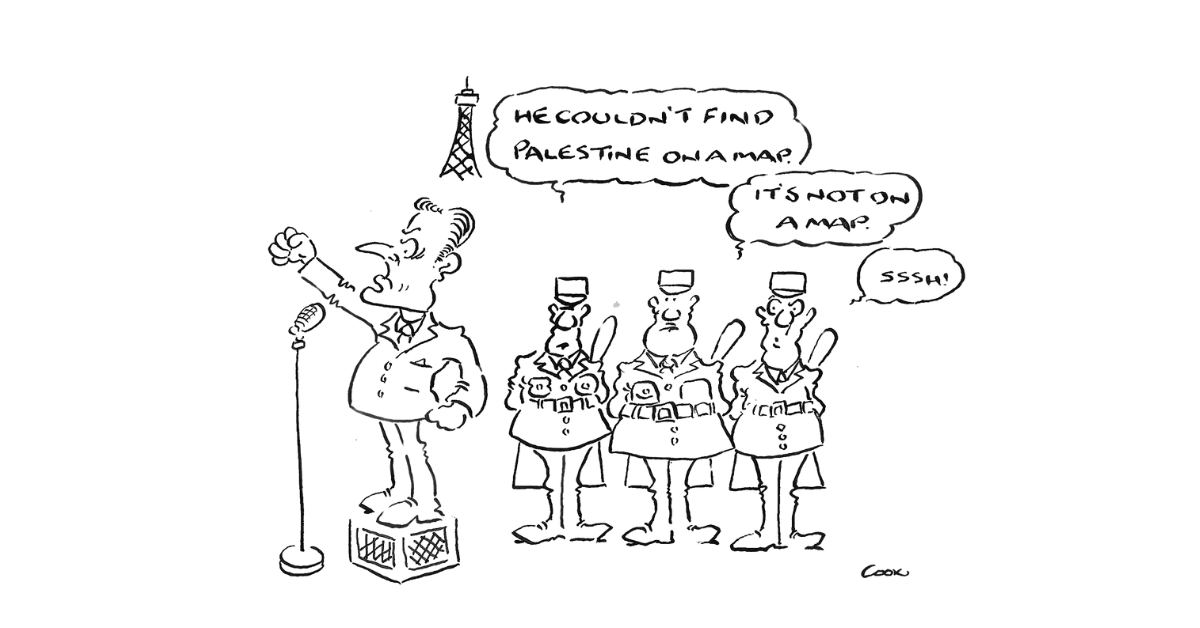
If you are a national leader with an approval rating of 19%, there is always a possibility that you will leap upon a populist issue to boost your rating. And so, this week the President of France has decided that his country will recognise the State of Palestine. He told the world last weekend. “France will make a decisive contribution to peace in the Middle East.”
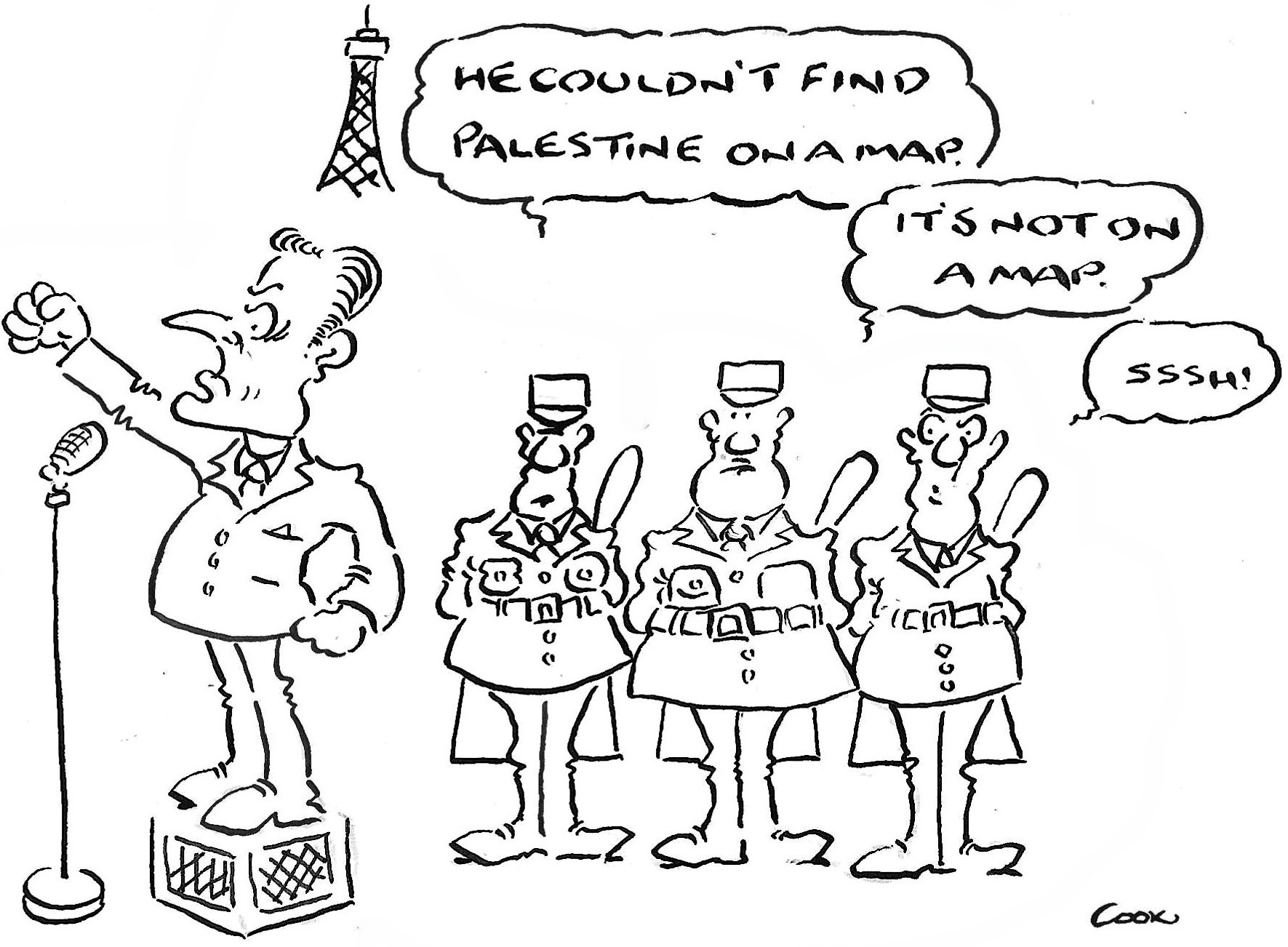
Emboldened by and wanting to better his cross-channel counterpart, the also popularity-beleaguered UK PM Keir Starmer has also decided to go down the same path, but his recognition is conditional on conditions that do not encourage Hamas to agree to a ceasefire. For a lawyer, as he is, that is a bad oversight.
Canada’s PM has also hopped on the peace train, a recognition policy that is conditional on conditions that cannot be met.
Meanwhile, Albo remains stuck on the horns of a dilemma. What to do about Hamas?
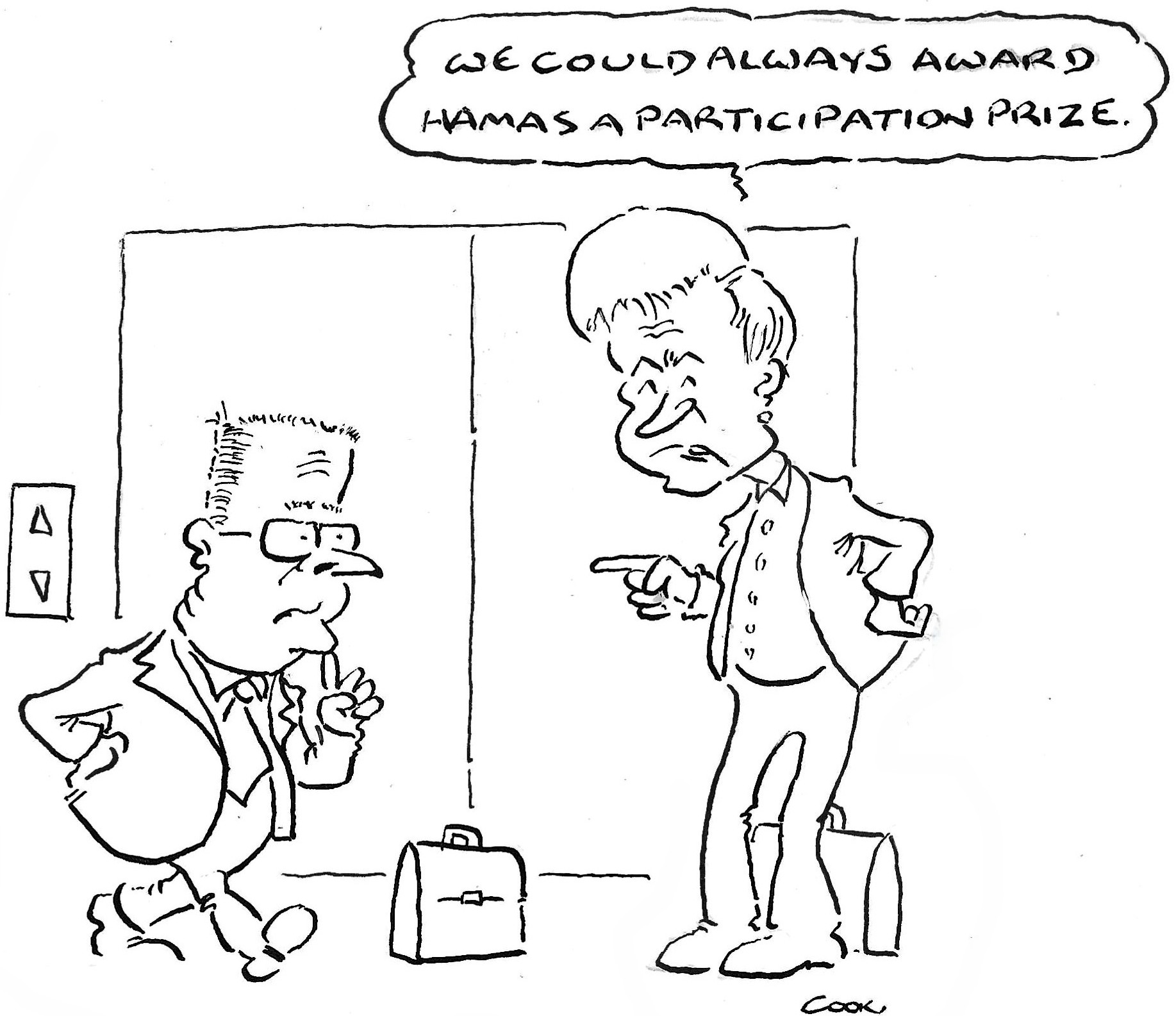
Had these gurus thought that:
- Their announcements are based on punishment of Israel, not the merits of a recognised Palestine. Thereby reflecting a political and emotional response to the Gazan disaster, not the realities.
- A Palestinian state doesn’t yet exist. The maps do not tell Readers that Gaza and the West Bank have different and non-functioning governments, both are administered by NGOs, and have corrupt war-lords (Gaza) and corrupt officials (West Bank).
- Occupying territory is useful, having a flag is nice, but having an agreed ideal of the destruction of Israel is not a useful policy for recognition.
Readers will be aware that the Arab League, which includes Qatar, Saudi Arabia and Egypt, have this week condemned – for the first time – Hamas’ massacre of 7 October 2023. It has also called on Hamas to disarm and leave Gaza.
Hence the reality that the hands that hold the cards to a ceasefire and a ‘lasting peace’ are not the leaders of France, Britain or Canada (or Australia, for that matter).
They are those of Qatar, Iran, Saudi Arabia and… the United States.
2. Russia’s naval, err, power
Over last weekend, Tsar Vlad travelled to St Petersburg to rouse the passions of Russia’s sailors in a speech to open a series of naval drills involving 150 warships.
Sadly, the flagship of the Russian navy did not take part in the exercises. Y’see, the Admiral Kuznetsov, Tsar Vlad’s remaining aircraft carrier, launched in 1985 and fully operational in 1995, has been out of service since 2017.
Its modernisation has been hampered by accidents, embezzlement of funds, and failed overhauls. Eight years is a long time to be in the workshop. And so, it will likely be scrapped.
The ultimate humiliation was when it supported Russian forces in Syria in 2016-17. Problems with its engines meant that it has to be accompanied by a tug-boat.
Tsar Vlad didn’t think it would be a good look to launch the naval exercises from the flight deck of the Admiral Kuznetsov at the dry dock in Murmansk. He did so from a frigate in St Petersburg. The frigate did not need a tug-boat.
3. Brexit: who’s now laughing?
It’s ironic. The people who were campaigning for a second referendum to overturn Brexit, have negotiated a much better tariff regime with the US than has the EU.
The Brits got a friendly I-liked-the-Queen rate of 10%, but the EU just signed up with Trumpster for 15%. The EU was only a little more effective in negotiating with Trumpster than Vietnam or Indonesia.
Readers might consider that businesses in Northern Ireland can now sell into the US on a 10% tariff, whilst those south of the border are subject to a 15% rate.
Wry & Dry expects that British hubris will be short-lived. The government’s management of its finances has been shambolic. And an illegal migrant avalanche is dividing the country. A poll this week in The Economist is nothing for the politicians to be proud of.
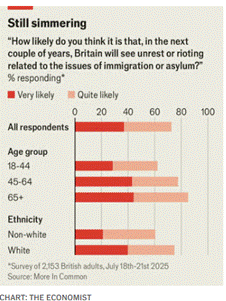
The UK’s political parties have lost any semblance of a unifying narrative. Each seeks to multiply its vote by dividing the nation. Will the UK soon repeat its 1978-9 Winter of Discontent?3
3 The term was used to describe the state of the UK economy in the dying years of Callaghan’s Labour government in February 1979. In the country’s coldest winter for almost two decades, the government had failed to control the power of trade unions, the outrageous pay demands and strikes of which crippled the government and the economy. Riots were commonplace. Conservative Margaret Thatcher then won the May election by a landslide. Labour would not return to power for 18 years.
The opening lines of Shakespeare’s Richard III are probably his most famous: “Now is the winter of our discontent/ Made glorious summer by this sun of York…”
4. Tariffs, shmariffs
Albo is having a good week. But others not so good.
Firstly, the lower inflation data pointed to a probable cut in his home loan rate. And this morning Trumpster announced that the base tariff on Australia will be 10%, with no other country with lower reciprocal tariffs.
So, imagine the conversations in the cocktail lounge in the basement of the UN building in New York. The Australians would boast of its 10% rate and be toasting with a magnum of Grange. The innocent New Zealanders would seem sheepish about its 15% rate, but happy to share a Marlborough Sauvignon Blanc with the Japanese, South Korean and any EU member, also on 15%.
Those sulking in the corner with cheap wine and a three-day growth would be Canadians (35%) and Brazilians (50%). And already on the floor from straight grappa were lobbyists for copper products exporters, they were wacked with a 50% tariff, which caused a 20% drop in copper prices, the biggest fall since the 1960s.
5. Immaturity to maturity in one day
Wry & Dry had some mail on Monday. And it wasn’t about the abject performance of his AFL team. It was about Teal MP Monique Ryan’s view that the voting age should be lowered to 16.
How dare Readers suggest that Ms. Ryan’s proposal is one to ensure her longevity in parliament!
However, this week there was much noise about Albo’s upcoming ban on social media access for people under the age of 16 (from 10 December). Which stirred the small number of cells in Wry & Dry’s brain to ponder voting age maturity.
Y’see Ms Ryan, under Albo’s proposal, a person under 16 cannot access social media as they are not mature or worldly enough.
But on the day they turn 16, you will say that they are suddenly worldly enough to vote. In one day, the new 16-year-old has gone from immaturity to maturity. Really?
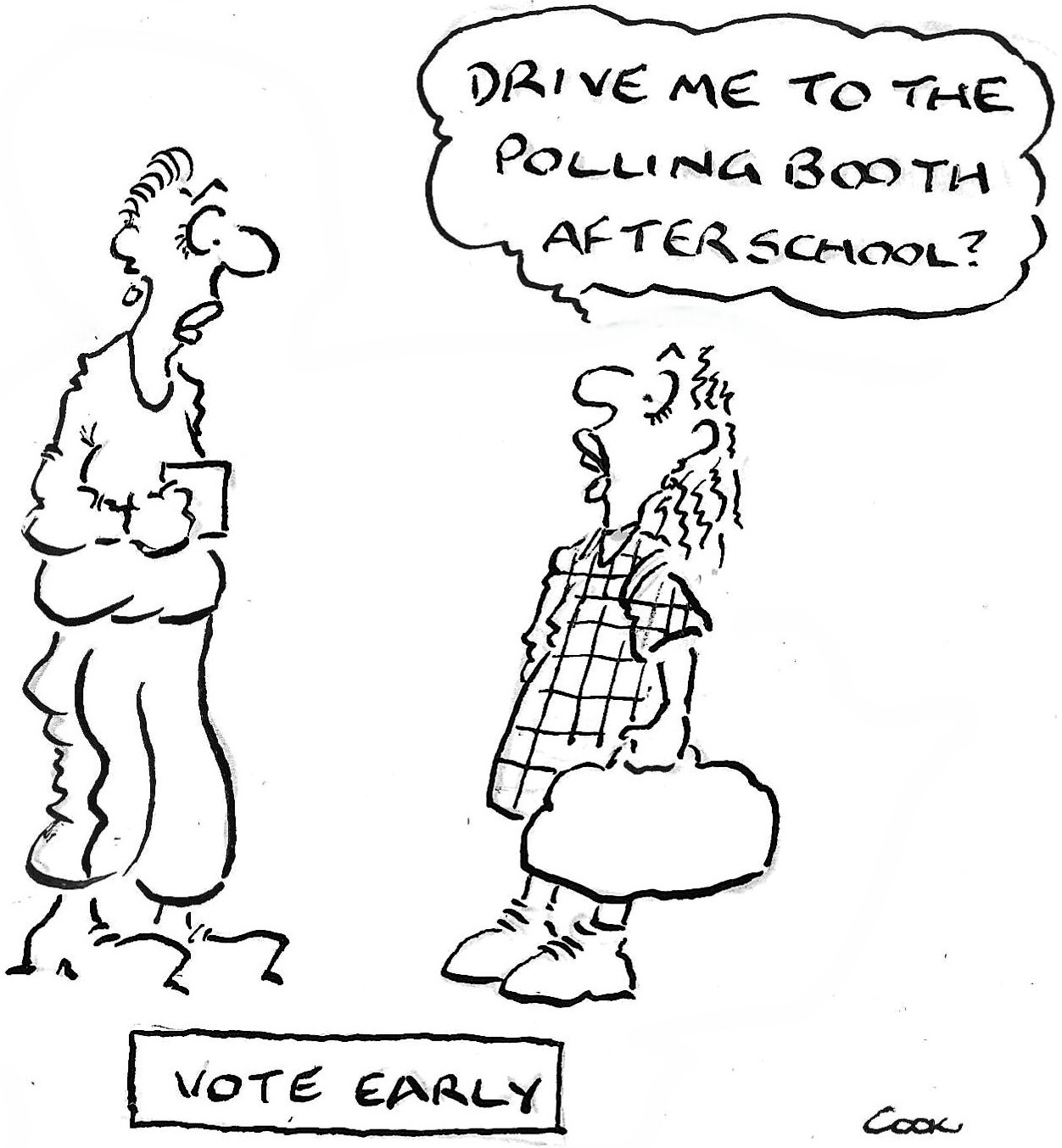
One might suggest that Ms Ryan’s motives are actually self-serving.
6. Victoria leads in something useful
Wry & Dry has spent years waiting for some data that showed that the Bankrupt State of Victoria actually led the nation in something valuable.
At last, the data has arrived. Education.
The 2025 Naplan (i.e. a national examination of the reading and numeracy skills of years three, five, seven and nine students) results have just been released. Just looking at years three and nine, Victoria topped the nation in Y-3 reading, Y-3 numeracy and Y-9 numeracy. And second in Y-9 reading.
Hats off to Victorian teachers!
By the way, of interest there were the usual results: girls outperform boys in writing and reading, but not in numeracy; the further a student from a major city the worse the results; and students with a language background other than English do better.
7. Another useful idiot. And with RDS.
Former Labor premier of New South Wales Bob Carr on Monday likened Israel’s actions in Gaza to “the worst of the last hundred years of Stalin’s Ukraine, of the Warsaw Ghetto, of Mao’s Great Leap Forward”.
The Stalin-caused Ukrainian famine of 1932–1933 resulted in the deaths of over 4 million Ukrainians.
The death toll in the Warsaw Ghetto, established by the Nazis in 1940, is estimated to be at least 300,000 who were killed either by bullet, gas, starvation, or during deportations and the Warsaw uprising.
The Great Leap Forward, initiated by Mao Zedong between 1958 and 1962, led to the deaths of between 15 and 55 million people, who died from famine, forced labour, and political persecution.
The situation in Gaza is appalling, but Wry & Dry is searching for the value that Mr. Carr was adding to the situation. And found none.
Mr. Carr’s manifest ignorance of history is only exceeded by his willingness to publicise it. A sure symptom of Relevance Deprivation Syndrome.
Where are the men in white coats? To take him away.
8. Another UK icon falls
The news caused gentlemen in gentleman’s clubs in St James to choke on their pre-lunch gin and tonics. Another confirmation that the UK is in decline. The news? A statistics release, disaster!
The Range Rover is no longer the UK’s most stolen car.
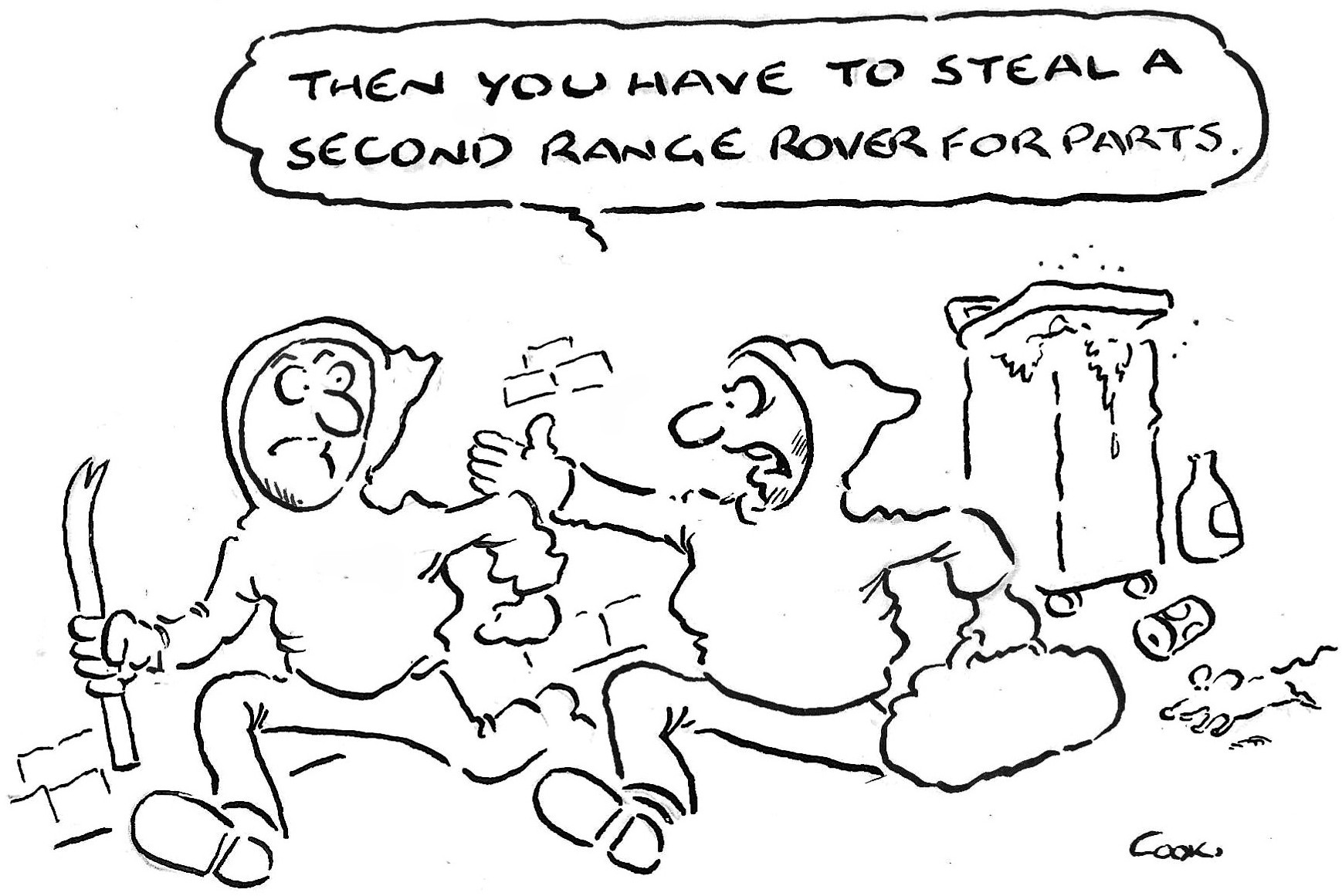
And it’s double humiliation. The title has now gone to a Japanese import, the humble Toyota Hilux.
Doubtless PM Starmer will introduce a bill into the Commons to recognise Land Rover, conditional upon there being a cease fire between Land Rover and Toyota and the return of all stolen cars.
Snippets from all over
1. Another $4tn company
Just weeks after the AI boom produced the first $4 trillion company, it has minted a second. Microsoft crossed the market-capitalization milestone Thursday morning as investors reacted to its fourth-quarter earnings report. (Wall Street Journal)
Wry & Dry comments: Nvidia hit the 4tn mark in June.
2. UK business confidence collapses
Confidence in the British economy among business leaders has tumbled to its lowest level since the Brexit vote, as bosses fear the impact of tax rises and President Trump’s trade war. (The Times)
Wry & Dry comments: An index that tracked optimism in the economy slid to -72 in July from -53 in June.
3. Trumpster’s monument
Donald Trump has ordered the construction of a $200mn state ballroom on the east wing of the White House, with work on the new structure due to start in September. (Financial Times)
Wry & Dry comments: If he cannot get his likeness on Mt Rushmore, he will ensure naming rights on the new ballroom.
4. A slimming share price
Shares in Novo Nordisk plunged after the Danish drugmaker cut its full-year sales and profit forecasts for the second time in 2025. It cited weaker-than-expected demand for Wegovy and Ozempic, its weight-loss drugs, amid intensifying competition. (Financial Times)
Wry & Dry comments: Once Europe’s most valuable company, Novo Nordisk has lost more than half its market value since peaking in 2024.
5. Iran executes
Iran executed two members of MEK, a banned opposition group, for attacking “administrative facilities, educational and charity centres”, among other sites. (Economist)
Wry & Dry comments: The men were convicted of moharebeh—waging war against God. Amnesty International said they were tortured and denied a fair trial. Iran’s execution rate is rising: over 900 executions were carried out in 2024, the highest since 2015.
It figures
- 2.1%: Australia. Inflation rate to the end of June, down from 2.4%. Interest rates should fall.
- 3.0%: USA. GDP growth in year to June. A sharp fall in imports boosted the number.
And to soothe your troubled mind…
“We have many cease-fires going on. If I weren’t around, you would have six major wars going on. India would be fighting with Pakistan.”
President Trump, speaking in Scotland.
Wry & Dry comments: Trumpster’s quest for a Nobel Peace Prize continues. And he still doesn’t understand the difference between a ceasefire and a lasting peace.
Disclaimer
The comments in Wry & Dry do not necessarily reflect those of First Samuel, its Directors or Associates.
Cheers!